10 hr
Mt. Fuji, Hakone Ropeway & Lake Ashi Day Tour from Tokyo
- Expert local guide
- Small group
- Skip-the-line access
- Free cancellation
Day Tour from Tokyo to Hakone — Mt. Fuji, Ropeway & Lake Ashi
Volcanic valleys and lakeside shrines, less than ninety minutes from the capital
Compare fares, pick the fit — all bookings are mobile-voucher and eligible for free cancellation where shown.
10 hr
11 hr
10 hr
Selecting the right access is essential for a successful day tour from tokyo to hakone, where the ropeway serves as a vital link in the regional transit network. Travelers can choose between standalone tickets or comprehensive passes to experience these mountain landmarks.
| One-Way Ticket Point-to-Point | Round-Trip Ticket Return Journey |
Top pick Hakone Freepass Unlimited Transit |
|
|---|---|---|---|
| Entrance fee | 2,000 JPY | 3,000 JPY | Included in pass |
| Best arrival window | 09:00–10:30 | 09:00–10:30 | 09:00–10:30 |
| Operating hours | 09:00–17:00 | 09:00–17:00 | 09:00–17:00 |
| Wait time | Station queue | Station queue | Priority boarding experience |
| Best for | Budget travelers | Short visits | First-timers |
| See tickets & prices |
Verdict: The Hakone Freepass offers the most convenience for a complete day tour from tokyo to hakone tour itinerary.
Worth it for first-timers seeking hassle-free logistics
A day tour from tokyo to hakone eliminates the complexity of navigating Japan's regional rail network and coordinating the Hakone Loop transportation pass—which alone requires orchestrating ropeway, pirate ship, and bus segments around your own itinerary. The organized option delivers direct coach transport, bilingual guides who handle ticket queues at Lake Ashi and the ropeway (the 2,000 JPY fare is typically bundled), and timed stops that maximize Mt. Fuji visibility windows. DIY travelers save money but spend 90+ minutes each way deciphering JR transfers at Odawara, then navigating the loop clockwise to avoid backtracking. For first-time visitors unfamiliar with Hakone-machi station layouts or volcanic valley trail access, the curated flow justifies the premium. Repeat visitors comfortable with Japanese signage and willing to linger at Owakudani sulfur vents will find independent travel more flexible and economical.
Bottom line: Day tour from tokyo to hakone tours trade flexibility for logistics certainty—first-timers gain peace of mind, independents sacrifice autonomy for convenience they may not need.
They complement each other; most visitors who do both call Hakone the more relaxing escape and the Nikko cultural tour the more visually ornate experience.
|
Top pick Hakone |
Nikko Toshogu | |
|---|---|---|
| Primary Attraction | Owakudani volcanic valley | Toshogu Shrine complex |
| Travel Time (one-way) | Approx. 85 min | Approx. 110 min |
| Entrance Fee | 2,000 JPY (one-way) | 1,600 JPY (shrine only) |
| Opening Hours | 09:00–17:00 daily | 09:00–17:00 daily |
| Best Arrival Window | 09:00–10:30 | 09:00 sharp |
| Key Vibe | Nature and hot springs | History and architecture |
| See tickets & prices |
Verdict: Choose a day tour from tokyo to hakone if you prefer volcanic landscapes and thermal springs, or select the Nikko tour if you prioritize UNESCO heritage sites and Edo-period craftsmanship.
Hand-picked experiences loved by thousands of travelers
10 hours
Free Cancellation
Personalized day trip to Japan's iconic mountain with flexible stops, English-speaking driver, and door-to-door service
10 hours
Free Cancellation
Discover volcanic valleys, serene lakes, sacred shrines, and Japan's most iconic mountain vista
10 hours
Free Cancellation
Customizable 10-hour private journey to Japan's iconic mountain, pristine lakes, and volcanic valleys
10 hours
Free Cancellation
Discover volcanic valleys, sacred shrines, and stunning Fuji views on this full-day adventure from Tokyo
10 hours
Free Cancellation
Explore Japan's iconic mountain, volcanic valleys, and historic shrines on this full-day adventure
10 hours
Free Cancellation
Discover Japan's iconic peak and surrounding landscapes on a personalized 10-hour journey with expert guidance
10 hours
Free Cancellation
Personalized 10-hour adventure exploring Japan's iconic mountain and surrounding attractions in comfort
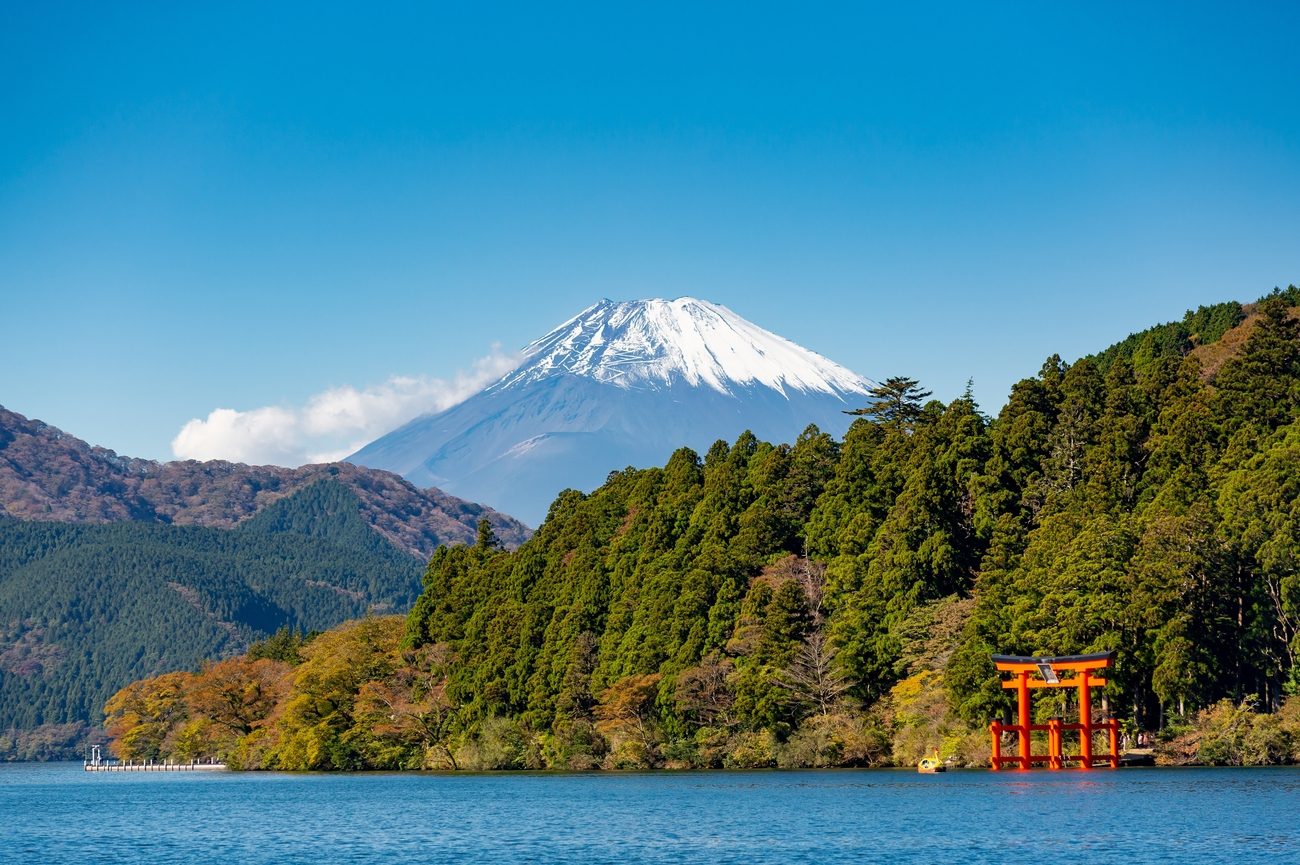
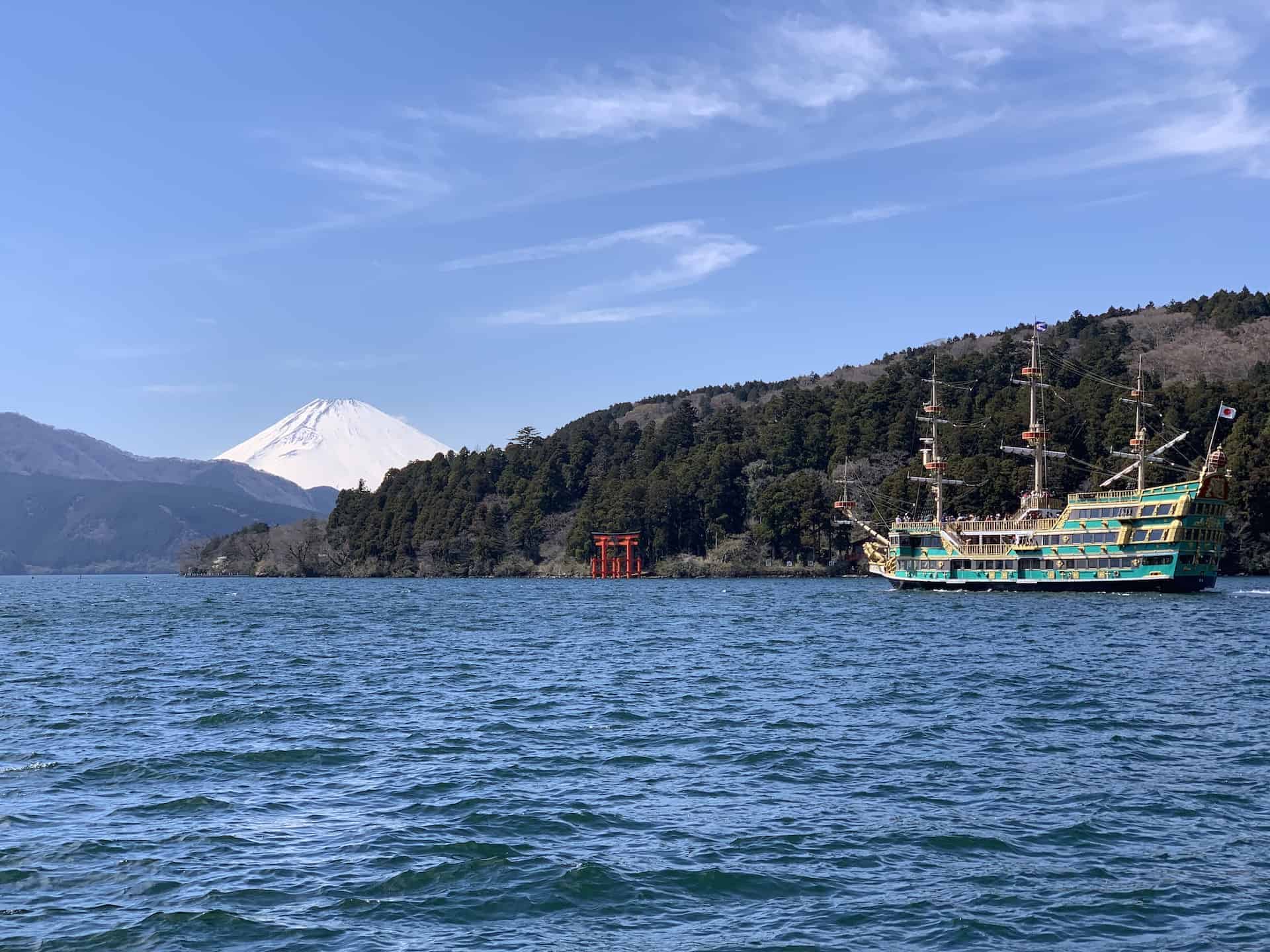
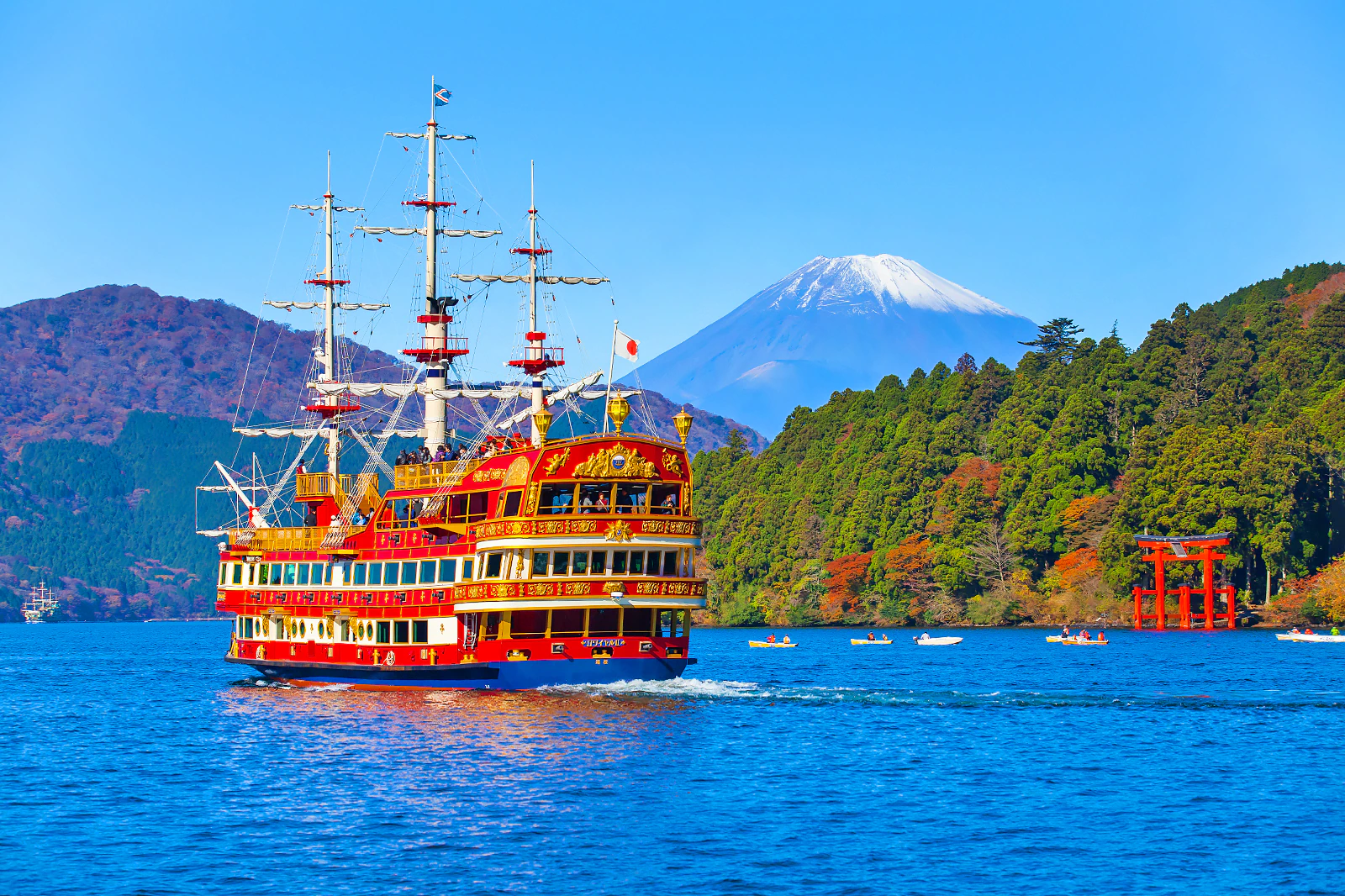
This crater lake offers views of the surrounding mountains and temple gates. It was formed after the eruption of Mt. Hakone.
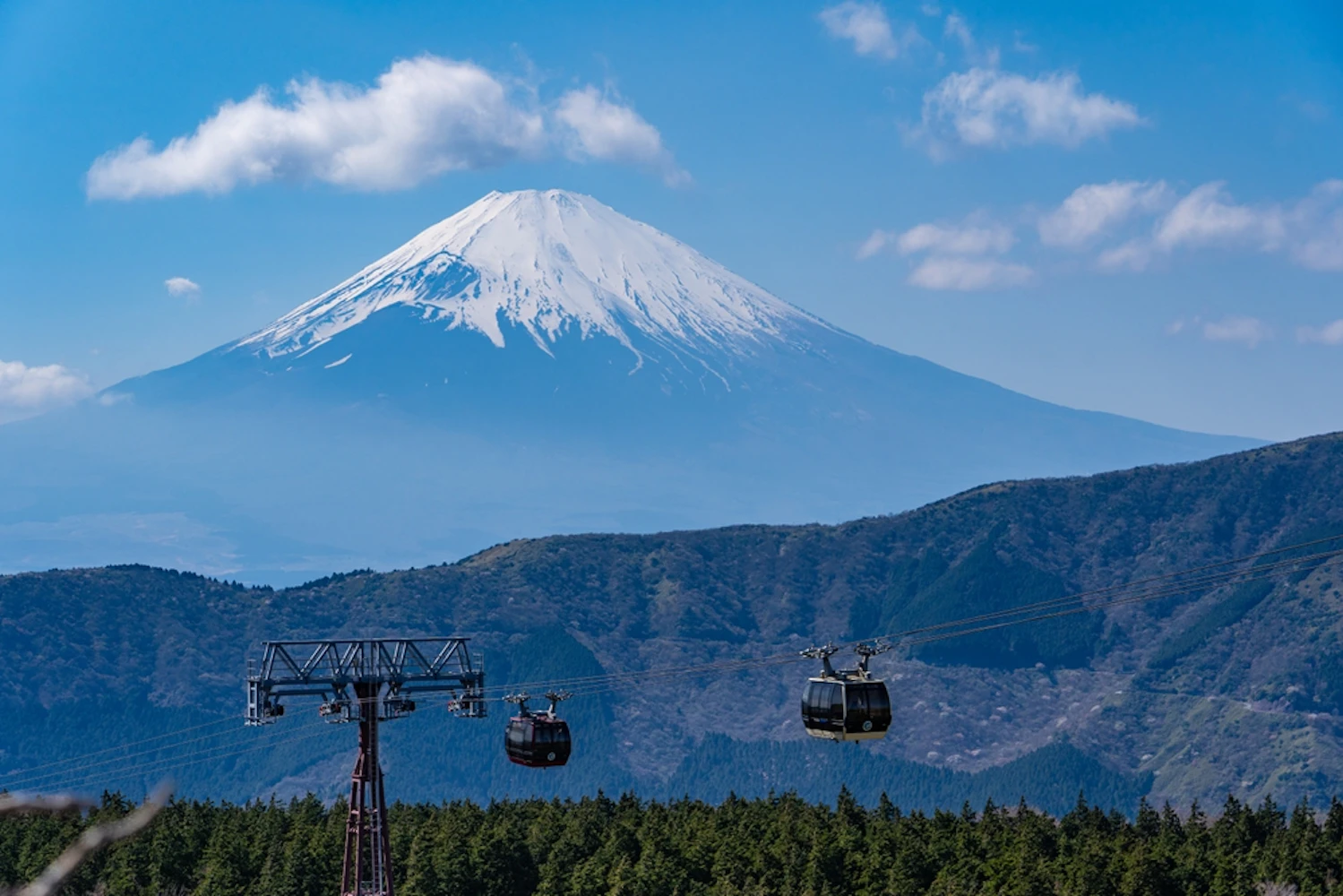
This transit system provides an aerial view of the volcanic valley. You can see sulfur vents and steam rising from the ground.
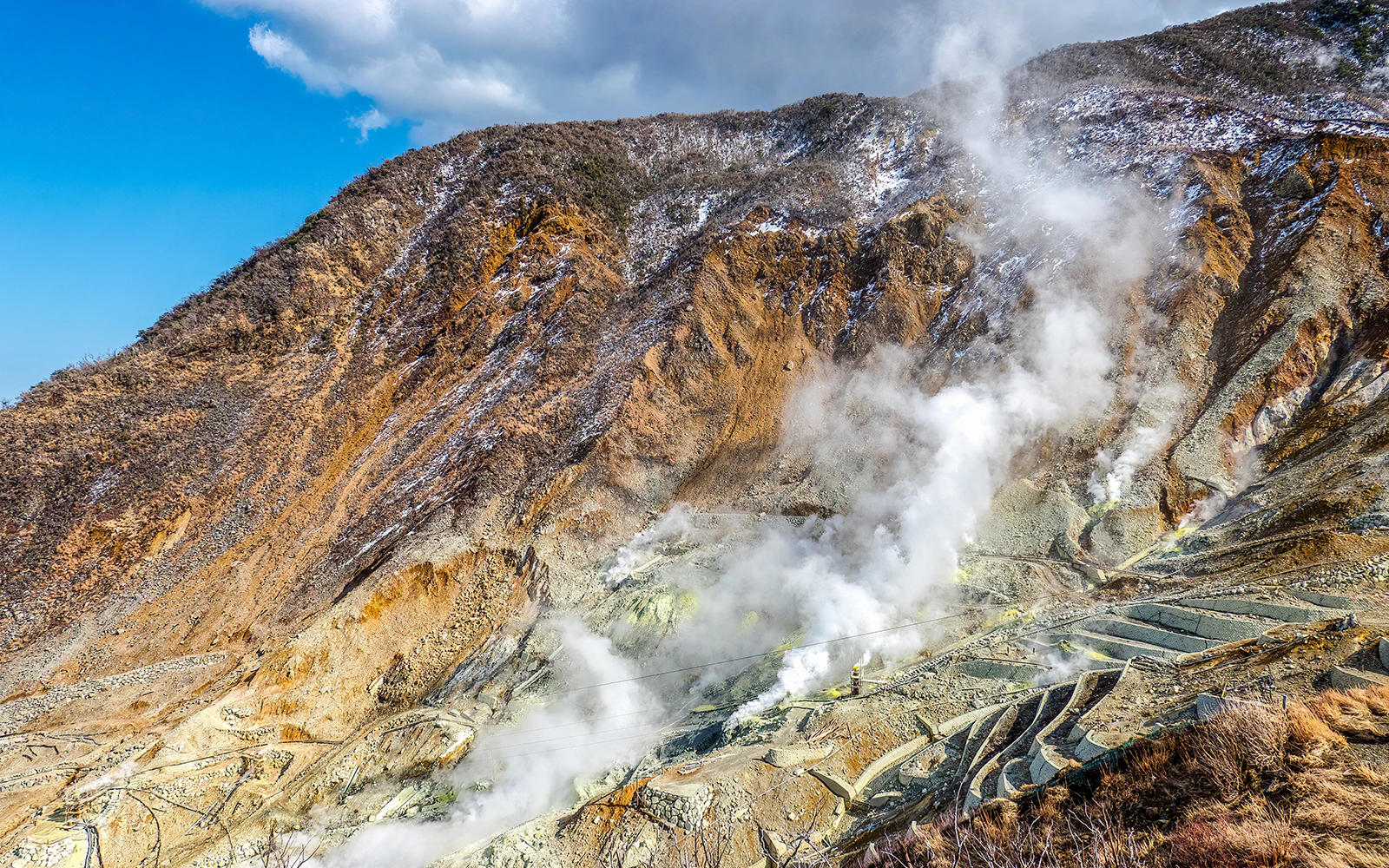
This volcanic zone features active steam vents and black eggs boiled in hot springs. It sits at an elevation of over 1,000 meters.
This space displays sculptures in a natural setting. It was the first of its kind in the country.
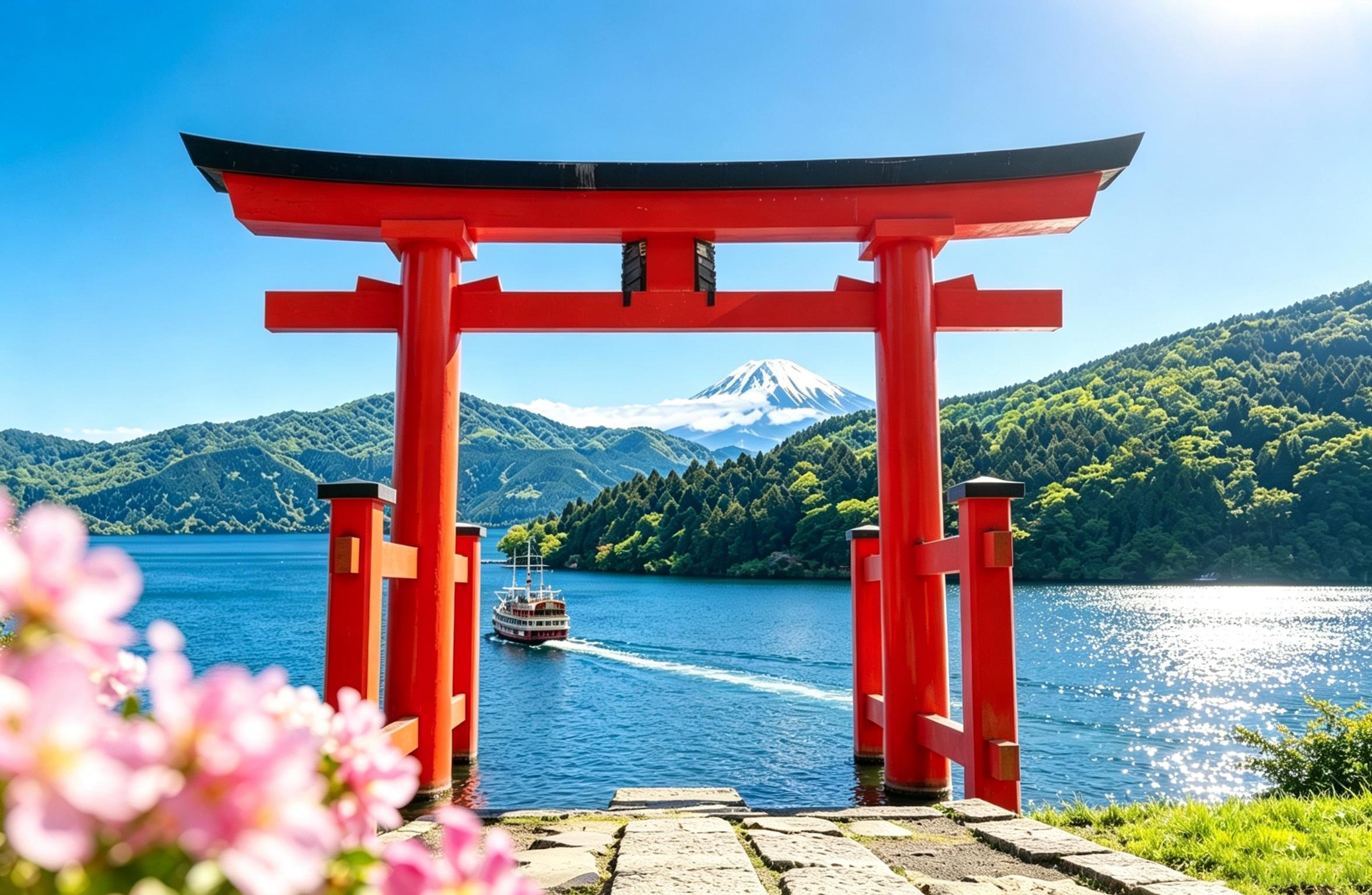
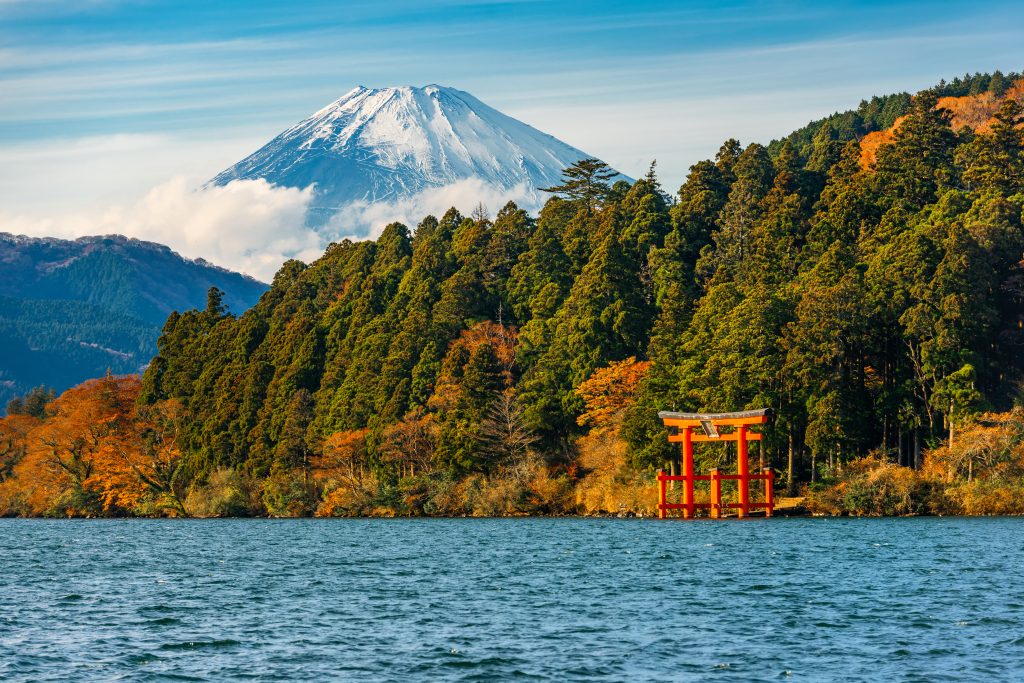
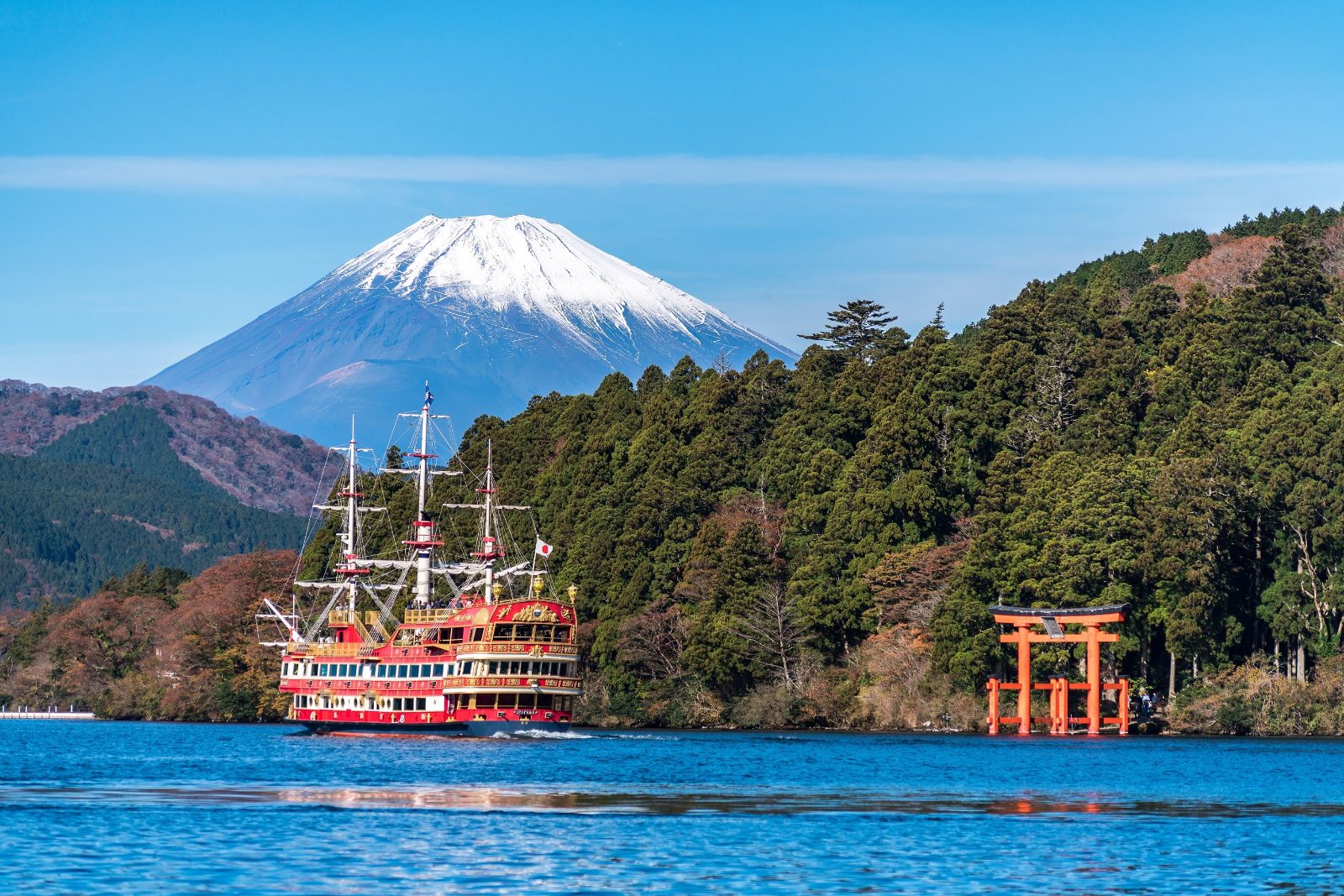
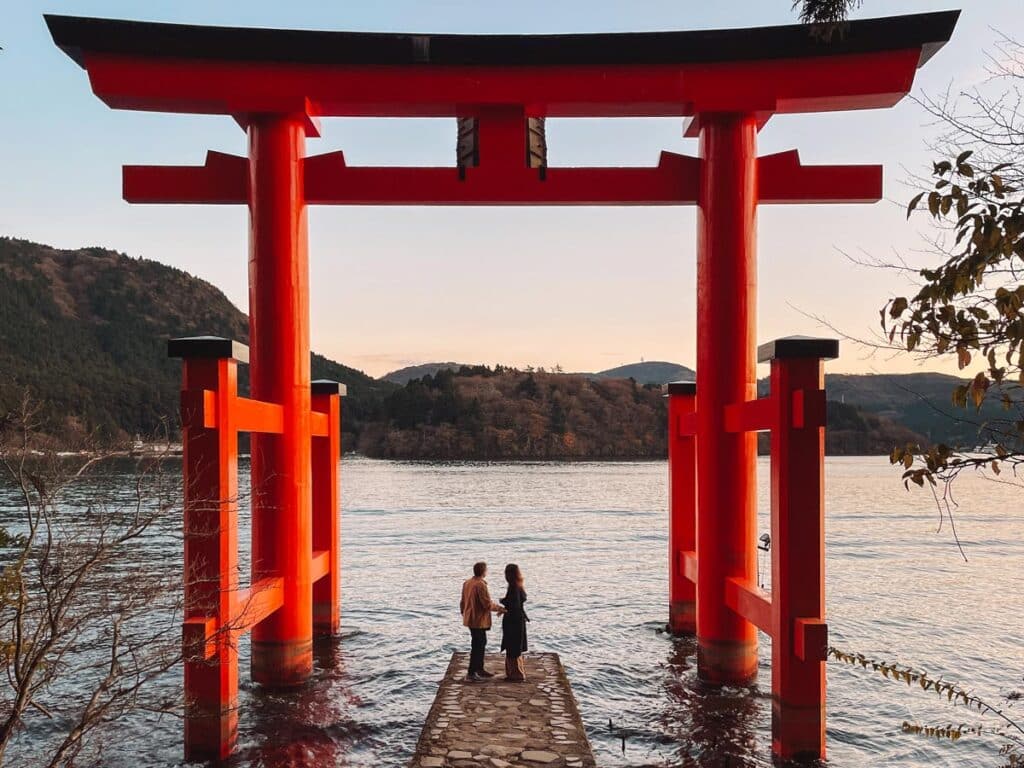
A historic site featuring a torii gate that appears to float on the lake. It is surrounded by cedar trees.
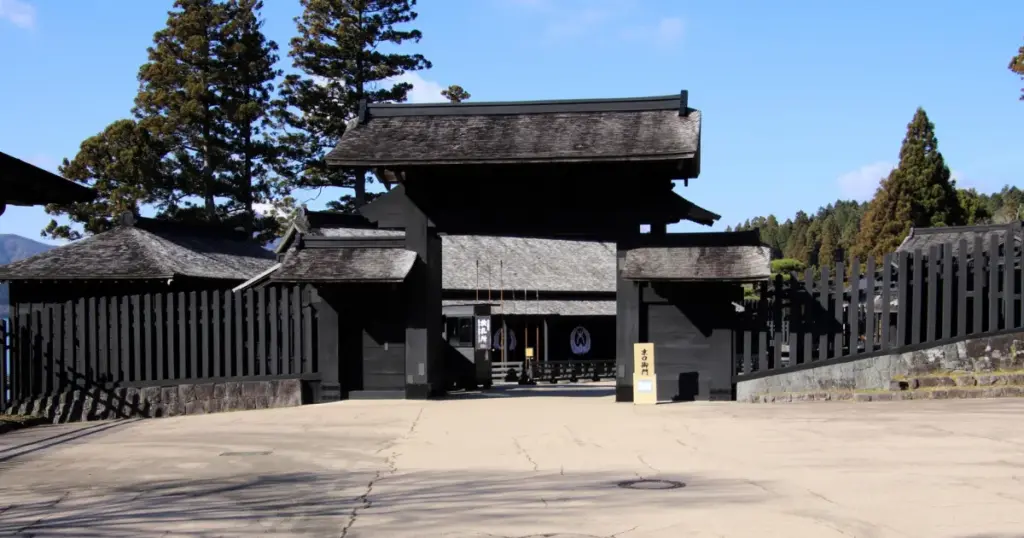
Reconstructed barrier station from the Edo period. It served as a strategic control point for travelers.
You board the Odakyu Romance Car at Shinjuku before 8:00, the train slipping past suburban sprawl into terraced foothills as Mount Fuji materialises above the ridgeline.
At Hakone-Yumoto you transfer to the mountain railway, a switchback line that climbs 445 metres through bamboo groves and past wooden inns steaming with onsen runoff. The ropeway gondola lifts you over Owakudani's bleached slopes, where sulphurous plumes rise from fissures and vendors sell eggs blackened in the volcanic springs — a local claim that each egg extends your life by seven years.
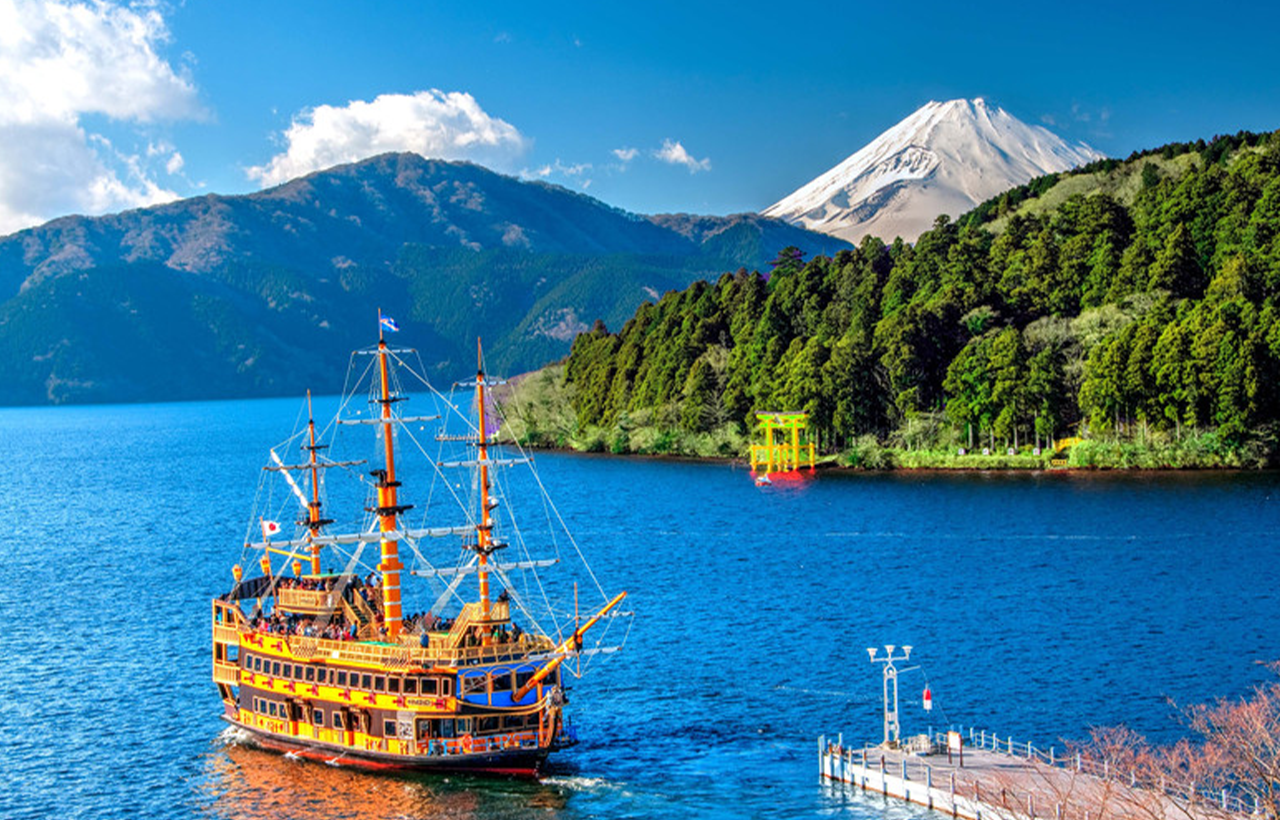
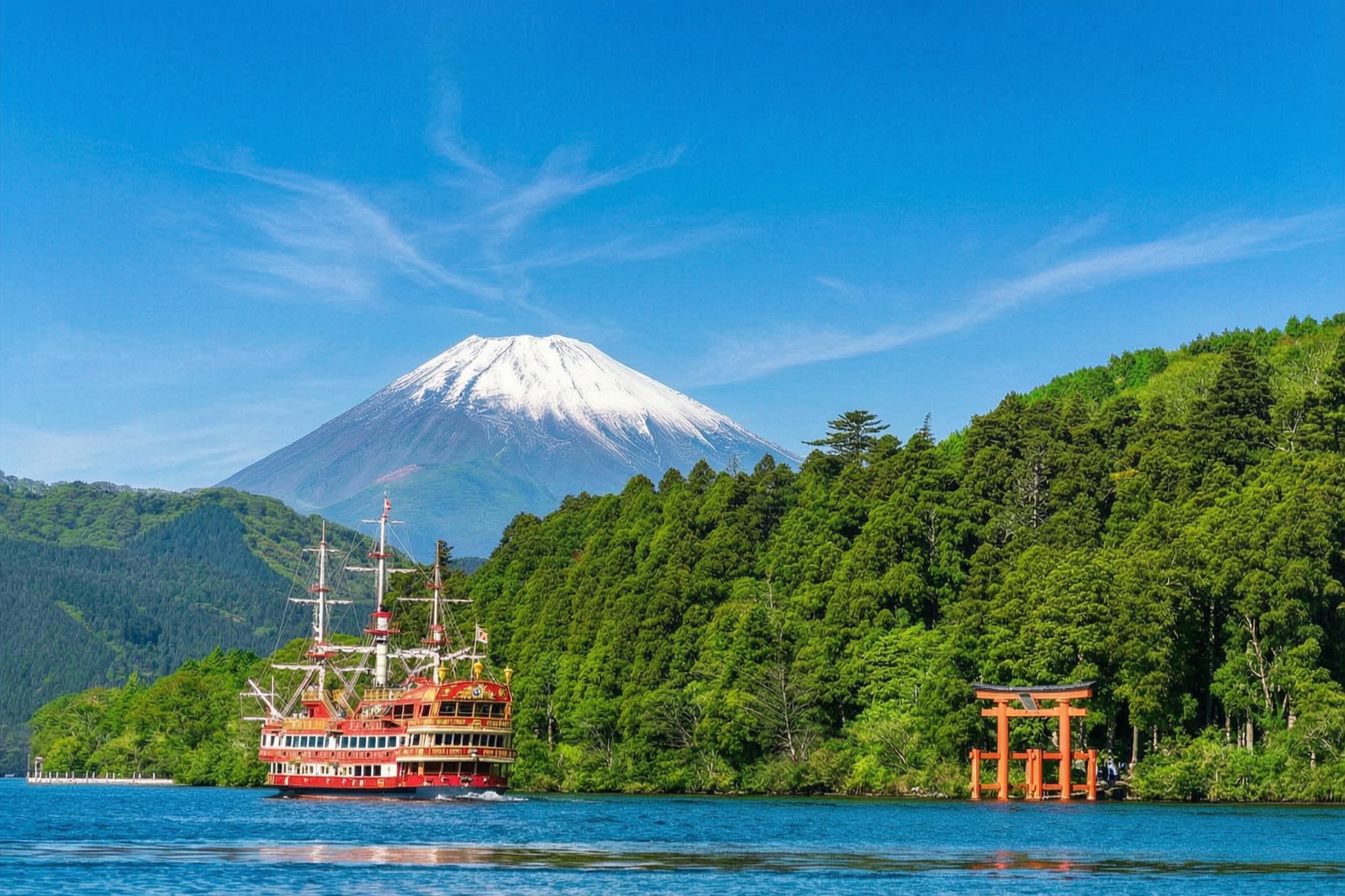
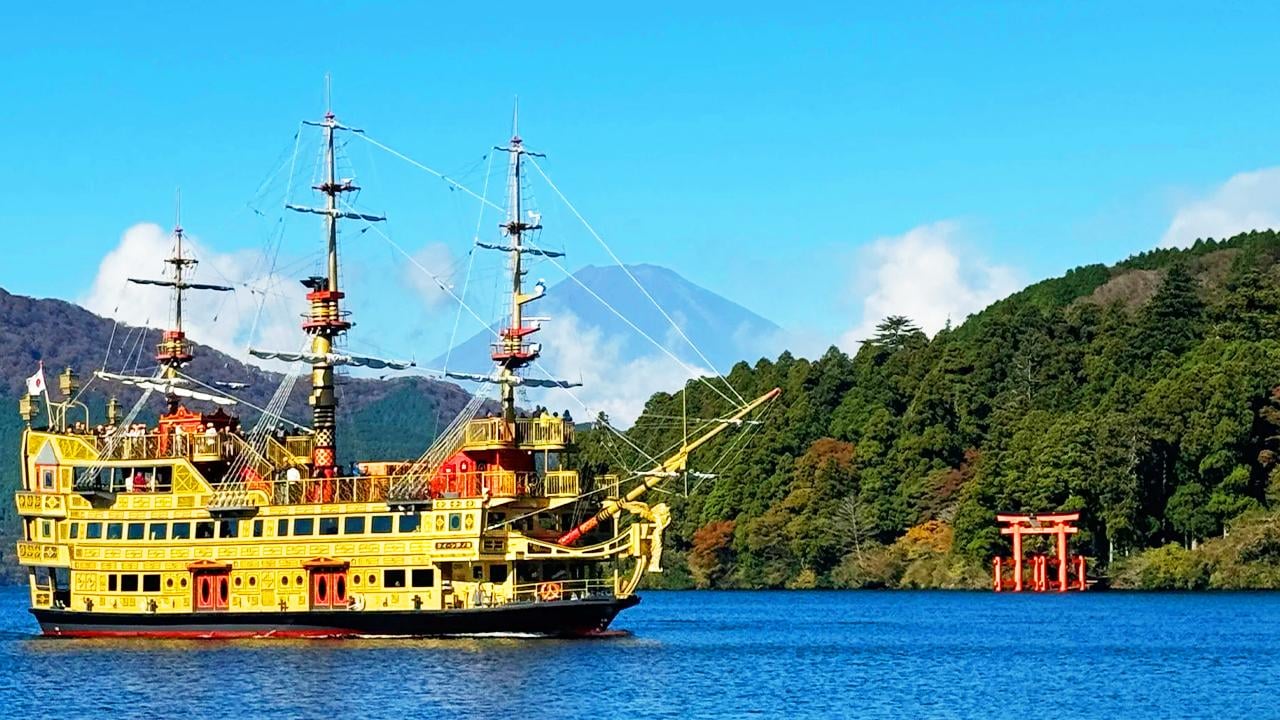
From Togendai you board a pirate-themed cruise ship across Lake Ashi, the water flat and green beneath the summit of Fuji. The 25-minute crossing delivers you to Moto-Hakone, where a stone-paved path leads through cryptomeria to Hakone Shrine. The offshore torii frames the lake and mountain in a single sightline, a composition that holds for approximately fifteen minutes before tour groups rotate through. You walk the lakeshore trail to Onshi-Hakone Park, a former imperial villa now converted to public gardens, before catching the afternoon coach back to Odawara. The Shinkansen returns you to Tokyo by 18:00, the city lights replacing the mountain silhouette as the train accelerates past 250 kilometres per hour.
All the details about your upcoming adventure in one place
Hakone's sulphurous valleys and cedar-lined lake have drawn Tokyoites seeking thermal refuge since the Edo period, when the Tōkaidō road carried feudal lords between Kyoto and the shogunate capital.
The five post towns of the Old Tōkaidō — Hakone-Yumoto, Tonosawa, Miyanoshita, Kowakudani, and Sengokuhara — evolved into a network of onsen inns and mountain shrines that remain the geographic spine of the region today. What began as a strategic mountain crossing is now a 120-square-kilometre wedge of Fuji-Hakone-Izu National Park, where volcanic fissures and caldera lakes occupy the collapsed remnants of Mount Hakone, a stratovolcano that last erupted 3,000 years ago.
The Hakone Ropeway, completed in 1959 and rebuilt with seismic-resistant pylons in 2020, remains the most direct passage between the sulphur-streaked slopes of Owakudani and the shores of Lake Ashi. Its 4-kilometre aerial route crosses active fumaroles that exhale hydrogen sulphide at temperatures exceeding 100 degrees Celsius, a geothermal canvas visible only from gondola altitude. At the southern terminus, the lake — a caldera basin fed by mountain runoff — mirrors the symmetrical cone of Mount Fuji on clear mornings, a view that has anchored Japanese woodblock prints since Hiroshige's Fifty-three Stations series in 1833.
Hakone Shrine, founded in 757 during the Nara period, occupies a cryptomeria grove at the lake's southeastern edge, its vermilion torii gate standing fifteen metres offshore in water shallow enough to wade at low tide. The shrine served as a pilgrimage terminus for mountain ascetics and a protective site for travellers braving the Hakone Pass. Its architecture — rebuilt after a 1943 fire — follows the Shinmei style of unpainted cypress and copper roofing, a template that prioritises impermanence over monument.
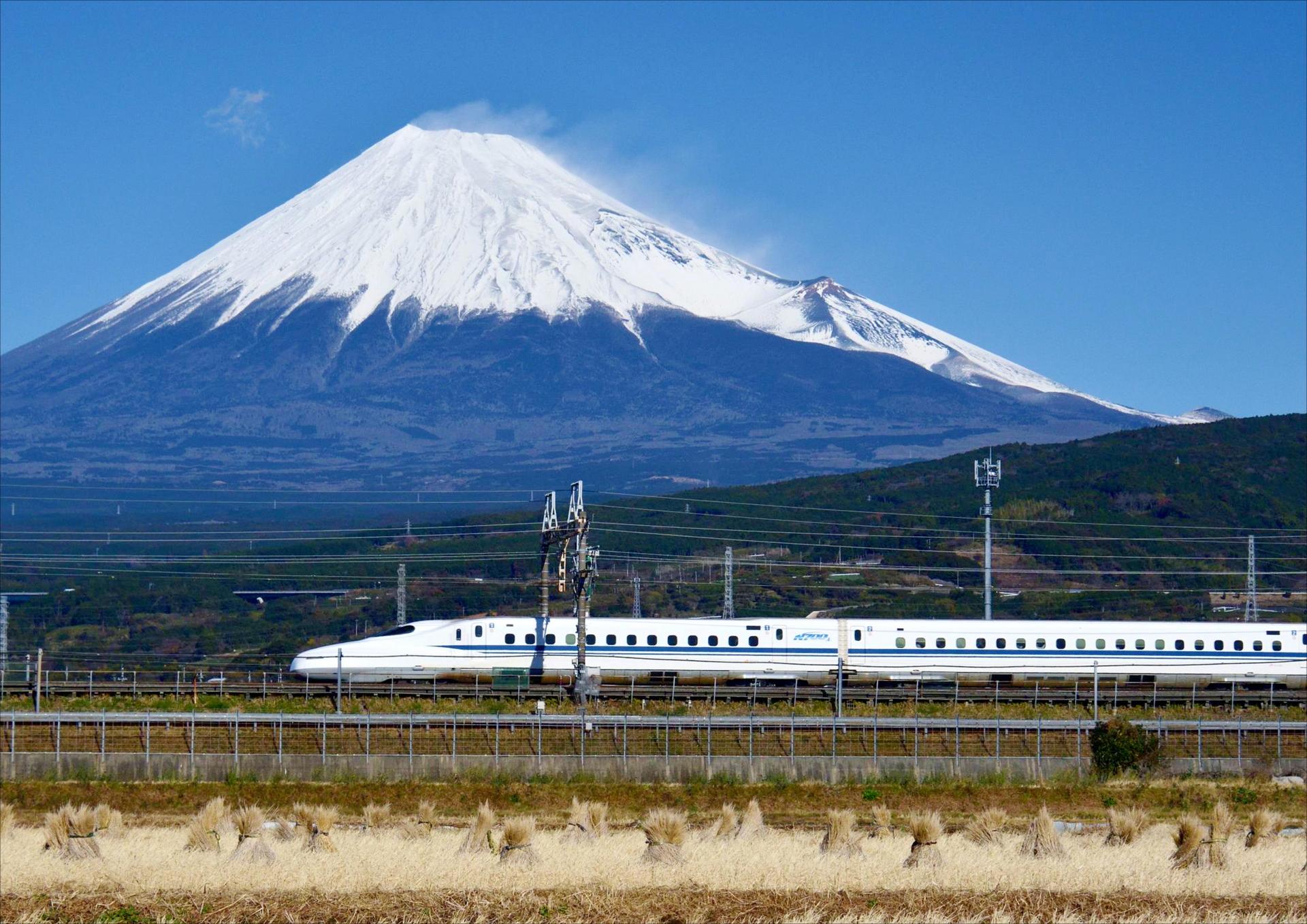
Day tour from Tokyo to Hakone itineraries centre on three geographic nodes: the ropeway for volcanic terrain, Lake Ashi for caldera perspective, and the shrine for historical continuity. The Odakyu Romance Car, a limited-express service inaugurated in 1957, covers the 85 kilometres from Shinjuku to Hakone-Yumoto in 75 minutes, half the time required by conventional rail. Return options include the Tōkaidō Shinkansen via Odawara, reducing travel to under 40 minutes and closing the loop between mountain retreat and metropolitan density.

The five post towns of the Old Tōkaidō evolved into a network of onsen inns and mountain shrines that remain the geographic spine of the region today.
Wear comfortable walking shoes suitable for exploring the terrain. Dress in layers as temperatures can fluctuate during a day tour from tokyo to hakone.
Lockers are available at transport hubs for your convenience. Keep small personal bags with you during your day tour from tokyo to hakone.
Photography is permitted in outdoor areas. Please be mindful of other visitors when capturing images during a day tour from tokyo to hakone.
Strollers may be difficult to navigate in certain mountain areas. Prepare for an active day when taking a day tour from tokyo to hakone with children.
Some areas have steep inclines or stairs. Please verify specific accessibility needs for your day tour from tokyo to hakone before departure.
Carry a refillable water bottle to stay hydrated. Food consumption is restricted to designated areas during a day tour from tokyo to hakone.
Opening hours
09:00–17:00
Address
Hakone-machi, Ashigarashimo-gun, Kanagawa Prefecture, Japan
Inquiry
+81-0460-85-7111
Arrival
09:00–10:30
Storage
Available at major stations
Official Site
https://www.hakonenavi.jp/international/en/
Public transport · 01:30 · Varies by pass
Use the Odakyu Romancecar from Shinjuku to Hakone-Yumoto.
Cancellations made within the provider's specific window are eligible for a partial refund. Entrance fees of 2,000 JPY may be non-refundable depending on the booking terms.
Recommended time
4-5 hours
To make the most of your day tour from tokyo to hakone, aim for the 09:00–10:30 arrival window to secure mountain visibility and lighter terminals. Managing these Hakone ropeway excursions requires balancing your itinerary to avoid mid-day congestion while moving between transit hubs. Selecting your day tour from tokyo to hakone tour wisely helps bypass peak bottlenecks, whereas those needing day tour from tokyo to hakone tickets should account for potential queue variance during weekends.
Crowd levels through the day
Weather · crowds · average price — dots go green to amber to red as each metric rises.
September to November offers cool temperatures and clear skies. It is an excellent season for viewing foliage during a day tour from tokyo to hakone.
Plan your arrival between 09:00–10:30 to avoid midday congestion. Following this window maximizes your chances for clear views of Mt. Fuji.
1-1-3 Nishi-Shinjuku, Shinjuku, Tokyo
Main hub for regional transport.
Get directionsHakone's transformation from volcanic wilderness into Japan's premier mountain resort began in the eighth century, when Buddhist monks established temple compounds near Ashinoko, the caldera lake formed by Mount Hakone's eruption three thousand years prior. The Tōkaidō highway, formalized under Tokugawa Ieyasu in 1603, threaded through the Hakone mountain pass and installed a sekisho checkpoint at its narrowest point, where officials inspected travelers and enforced the shogunate's ban on weapons entering Edo. This barrier station anchored Hakone-juku, one of fifty-three post towns serving merchants and samurai on the five-hundred-kilometer route between Kyoto and the new capital. The arrival of rail transformed access for day tour from tokyo to hakone excursions after the Meiji Restoration. The Tōkaidō Main Line reached Odawara in 1887, cutting travel time from Tokyo to three hours; the private Hakone Tozan Railway, opened in 1919, climbed switchbacks from Odawara to Gora through a series of three reversing stations, an engineering solution to the steep gradient. Hot spring resorts multiplied along the new rail corridor, catering to Tokyo's merchant class. The Hakone Ropeway, constructed in 1959 across the sulfurous Owakudani valley, completed the circular sightseeing loop and became the linchpin of modern Hakone tours, carrying passengers above active fumaroles to panoramic views of Mount Fuji. The Open-Air Museum opened in 1969 as Japan's first dedicated sculpture park, siting works by Rodin, Moore, and Picasso against the volcanic ridgeline. Lake Ashi's iconic pirate ships, introduced in the 1960s by Odakyu Electric Railway to evoke European leisure cruises, became the photographic signature of day tour from tokyo to hakone tickets despite having no historical precedent in the region. The 2015 volcanic alert temporarily closed the ropeway for five months, exposing the area's geological volatility and prompting infrastructure upgrades that now allow real-time gas monitoring and rapid evacuation protocols.
Buddhist temples founded near Ashinoko caldera lake, establishing Hakone's spiritual significance.
Tōkaidō highway formalized with Hakone checkpoint controlling passage between Kyoto and Edo.
Tōkaidō rail line reaches Odawara, reducing Tokyo travel time to three hours and opening mountain access.
Hakone Tozan Railway completes switchback climb to Gora, using reversing stations to manage steep gradients.
Hakone Ropeway spans Owakudani volcanic valley, creating the circular sightseeing route still used today.
Hakone Open-Air Museum inaugurated as Japan's first outdoor sculpture park with international modern works.
Volcanic alert closes ropeway for five months, triggering infrastructure upgrades and continuous gas monitoring systems.
Capture the sulfurous steam vents and rugged volcanic terrain from the designated observation area. This site provides a dramatic perspective of the geological activity during your day tour from tokyo to hakone.
Position yourself on the outer deck to frame Mt. Fuji rising above the calm waters of the caldera lake. This spot is a highlight of Hakone landmarks when weather conditions permit clear visibility.
This vantage point offers a panoramic look at the surrounding mountains and the lush valley floor below. Ensure you have your day tour from tokyo to hakone tour details ready, as this aerial perspective is accessed via the ropeway.
Photograph the reconstructed Edo-period gate and wooden structures that served as a historical barrier between regions. The dark timber contrasts well against the natural forest backdrop.
Planning a day tour from tokyo to hakone allows families to experience the scenic ropeway and sulfuric hot springs together. Using this Hakone ropeway tour ensures you navigate the mountain transit system efficiently with children in tow.
Large strollers are difficult to maneuver on the aerial lift; collapsible umbrella strollers are recommended for your day tour from tokyo to hakone tickets. Keep in mind that you must fold them before boarding the gondolas.
Baby-change tables are available at major stations, but space is limited inside the cabins of this Hakone sightseeing tour. Plan to handle diaper changes at the stations before or after your transit legs.
The best arrival window is 09:00–10:30 to avoid peak mid-day crowds and ensure you can move at a child-friendly speed. Following this schedule helps maintain a calm rhythm for young travelers during your day tour from tokyo to hakone tours.
Children under adult supervision should remain seated during the transit, as the mountain winds can occasionally cause the cars to sway. Always hold onto your belongings and secure loose items before the gondola departs the station.
Dining options near the volcanic terrain are primarily concentrated at transit hubs, making a day tour from tokyo to hakone convenient for travelers seeking quick local snacks. You will find several establishments serving regional specialties near the ropeway station, which is an ideal stop for those planning their Hakone landmarks itinerary.
Famous for black eggs boiled in volcanic hot springs, this spot is a quick stop for a unique local snack. It serves as a central hub for visitors using day tour from tokyo to hakone tours to explore the geothermal area.;Owakudani Station Restaurant
Everything you need to know for your journey
The region is open 09:00–17:00 daily. Please plan your visit within these operational hours.
Accessibility varies by site; please check your specific itinerary for details. Not all locations are fully wheelchair accessible.
Large luggage and drones are restricted. Stick to small bags during your visit.
The best arrival window is 09:00–10:30 to avoid crowds. This timing also increases the probability of seeing clear views.
The ropeway fare is 2,000 JPY per adult for a one-way trip. Prices may vary for other attractions.
The region is located at Hakone-machi, Ashigarashimo-gun, Kanagawa Prefecture, Japan.
Food should be consumed in designated areas only. Always carry a water bottle.
Photography is allowed in public spaces. Be respectful of other guests during your day tour from tokyo to hakone.
Public transport via the Romancecar is the recommended method. It connects Tokyo directly to the area.
Famous for its red torii gate on the lake.
Area with many traditional ryokan inns.
Join thousands of happy travelers who have discovered this incredible experience
Book Your Experience Now