10 hr
Mt. Fuji & Hakone Full-Day Adventure from Tokyo
- Expert local guide
- Small group
- Skip-the-line access
- Free cancellation
Day Trip from Tokyo to Hakone Mt Fuji — Reserve Your Scenic Journey
Volcanic valleys meet sacred peaks, alpine lakes frame Japan's icon
Compare fares, pick the fit — all bookings are mobile-voucher and eligible for free cancellation where shown.
10 hr
10 hr
11 hr
For a successful day trip from tokyo to hakone mt fuji, choosing the right travel pass is essential to navigate the region's diverse transit network. The Hakone Freepass provides the most efficient access to the area's iconic ropeways, cable cars, and sightseeing cruises while offering valuable discounts at local landmarks.
|
Top pick From Shinjuku Includes round-trip travel |
From Odawara Local area pass only | |
|---|---|---|
| Unlimited transit | 8 transport modes | 8 transport modes |
| Round-trip transit | Included (Odakyu Line) | Not included |
| Partner discounts | Approx. 70 facilities | Approx. 70 facilities |
| Best for | First-time visitors from Tokyo | Travelers arriving by Shinkansen |
| See tickets & prices |
Verdict: The From Shinjuku option is the most convenient choice for your day trip from tokyo to hakone mt fuji tour.
Worth it for volcano scenery and shrine pilgrims
A day trip from tokyo to hakone mt fuji delivers volcano-studded highlands, sulfur valleys, and Lake Ashi shrine gates two hours from the capital. The bookable full-day adventures bundle coach transport, Owakudani volcanic valley, Hakone Shrine torii, and Lake Ashi cruise for ¥10,000–14,000 per adult; bullet-train return options run ¥16,000–18,000. Entry to the Hakone region itself is free, but each attraction charges separately if you travel independently. The best arrival window—09:00–10:30—gives you clear summit views before afternoon mist rolls in. This Hakone itinerary pays off for travelers seeking alpine lakes, volcanic geology, and Shinto heritage without overnight lodging. Families chasing postcard Fuji photos and hot-spring relaxation will find concrete value; solo museum fans may prefer piecemeal tickets.
Bottom line: The day trip from tokyo to hakone mt fuji tour earns its cost if volcanic landscapes and lakeside shrines match your bucket list.
They complement each other; most visitors who do both call Lake Kawaguchiko the more direct choice for mountain views while Hakone offers a diverse loop of mountain transport. A well-planned day trip from tokyo to hakone mt fuji tours the caldera, whereas Kawaguchiko focuses on lakeside proximity.
|
Top pick Hakone |
Lake Kawaguchiko | |
|---|---|---|
| Primary draw | Mountain transport loop | Direct Fuji vistas |
| Fuji proximity | Partial views via circuit | Immediate shore proximity |
| Transport complexity | High (multi-modal) | Low (direct bus/train) |
| Activity variety | Museums, hot springs, boat | Parks, biking, viewing decks |
| Best for | All-day sightseeing variety | Clear summit photography |
| See tickets & prices |
Verdict: Choose the Hakone area if you prefer an active travel loop with varied transit, or select Lake Kawaguchiko for a day trip from tokyo to hakone mt fuji tour if your main priority is securing the most direct perspective of the mountain.
Hand-picked experiences loved by thousands of travelers
10–11 hours
Free Cancellation
Ascend Japan's iconic peak, cruise Lake Ashi, ride the Owakudani ropeway, and speed back to Tokyo by Shinkansen
10 hours
Free Cancellation
A full-day escape from Tokyo into Japan's natural heartland—volcanic valleys, mirror lakes, and Fuji views.
10 hours
Free Cancellation
Discover volcanic valleys, sacred shrines, and pristine mountain springs on this unforgettable Fuji adventure
10 hours
Free Cancellation
Discover volcanic valleys, sacred shrines, and Japan's iconic peak on this full-day adventure from Tokyo
10 hours
Free Cancellation
Discover Japan's most iconic mountain, volcanic valleys, and scenic lakeside shrines on this full-day escape.
10 hours
Free Cancellation
Escape the tour bus crowds with a fully customizable private journey to Japan's most iconic mountain and surrounding lakes.
10 hours
Free Cancellation
Discover Mount Fuji, Lake Ashi, and traditional hot springs on this customizable private tour from Tokyo
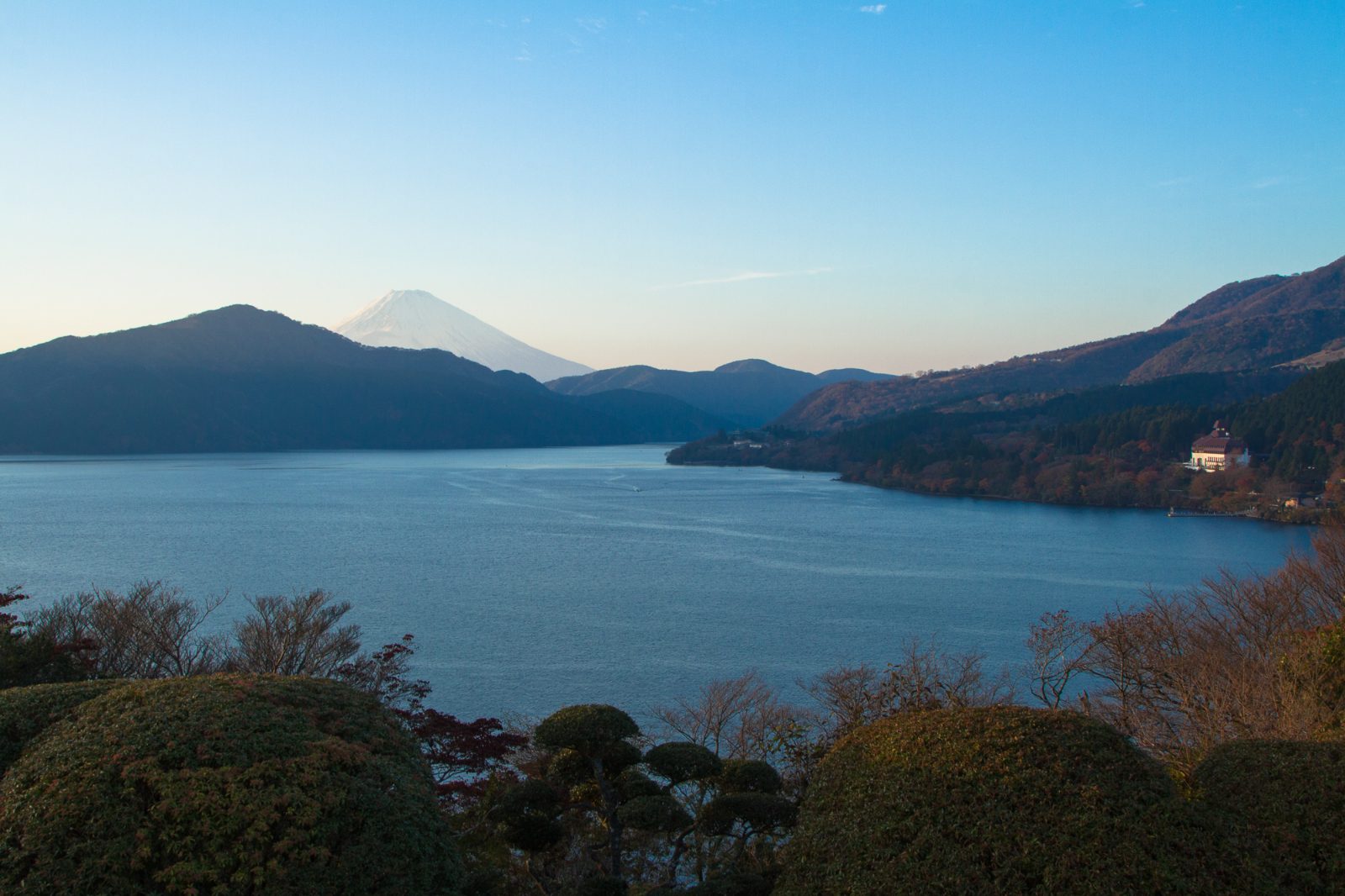
This volcanic lake offers reflections of the surrounding mountains and is a core part of any day trip from tokyo to hakone mt fuji.
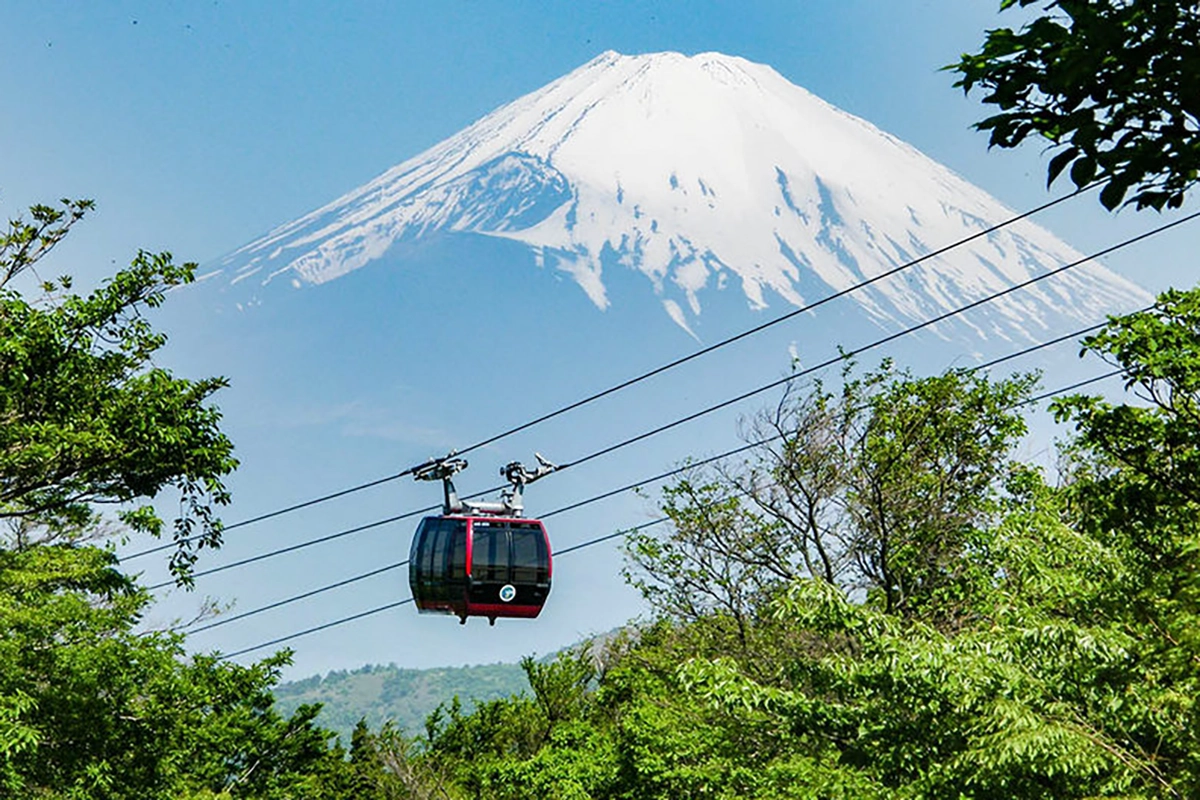
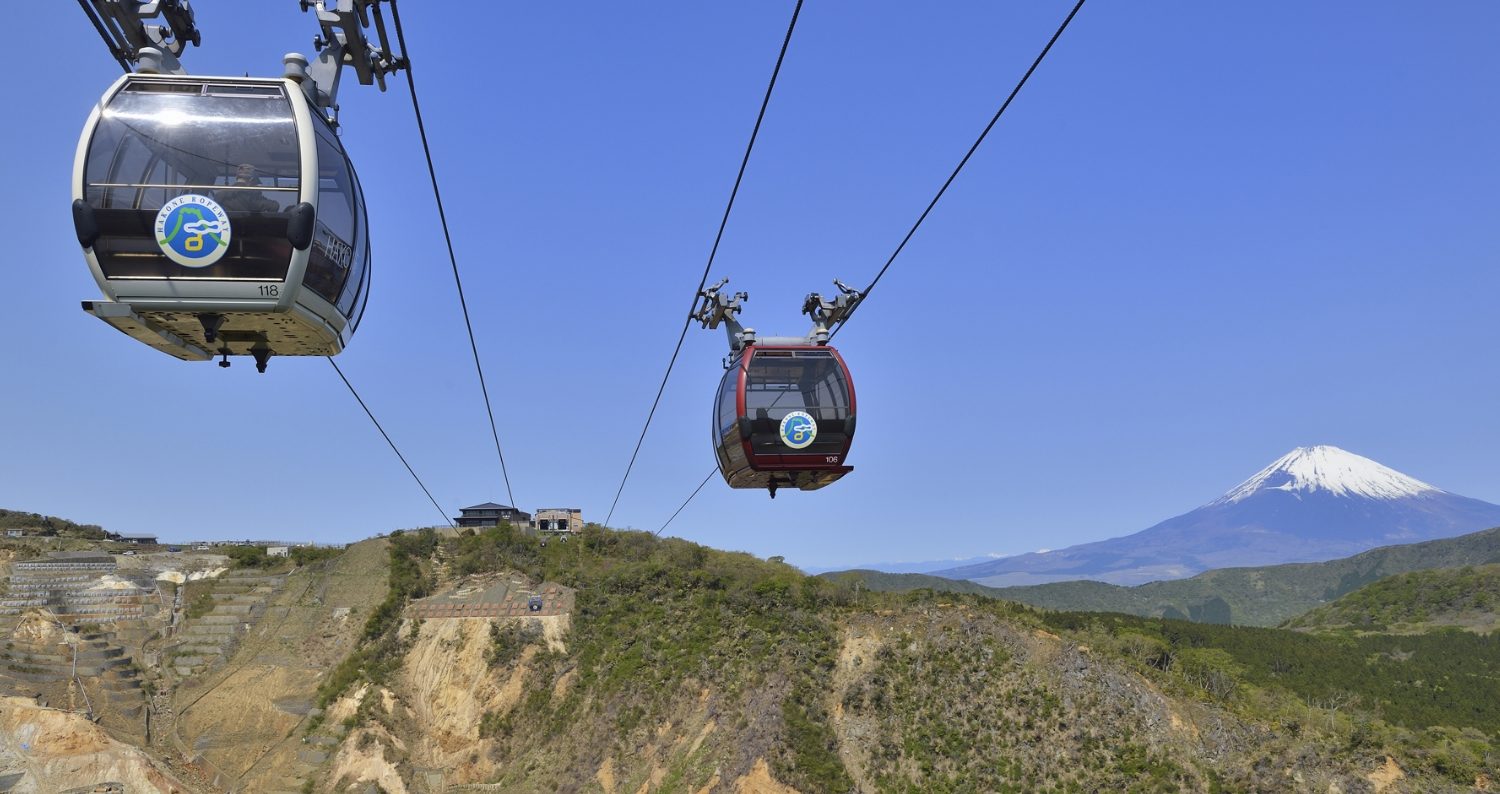
Experience aerial views of the active volcanic sulfur vents at Owakudani, a highlight of the day trip from tokyo to hakone mt fuji.
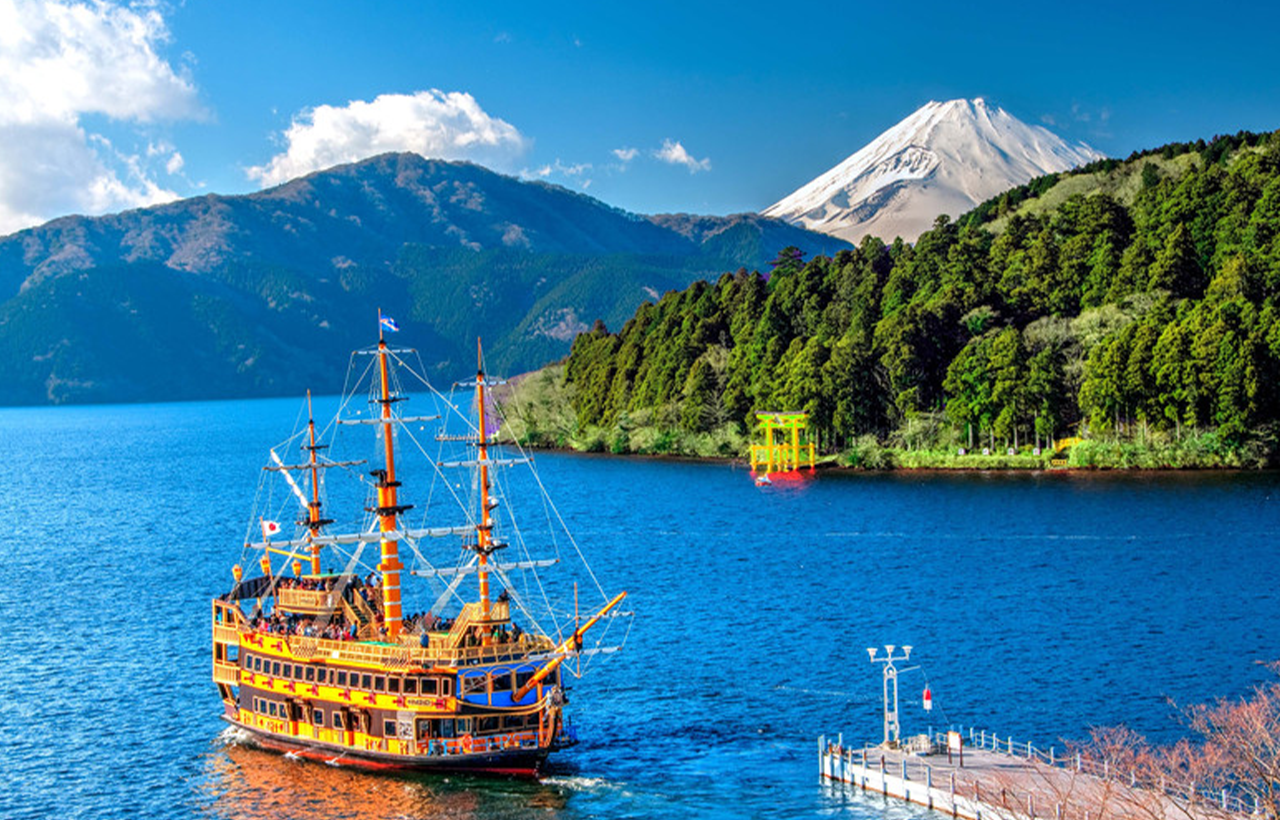
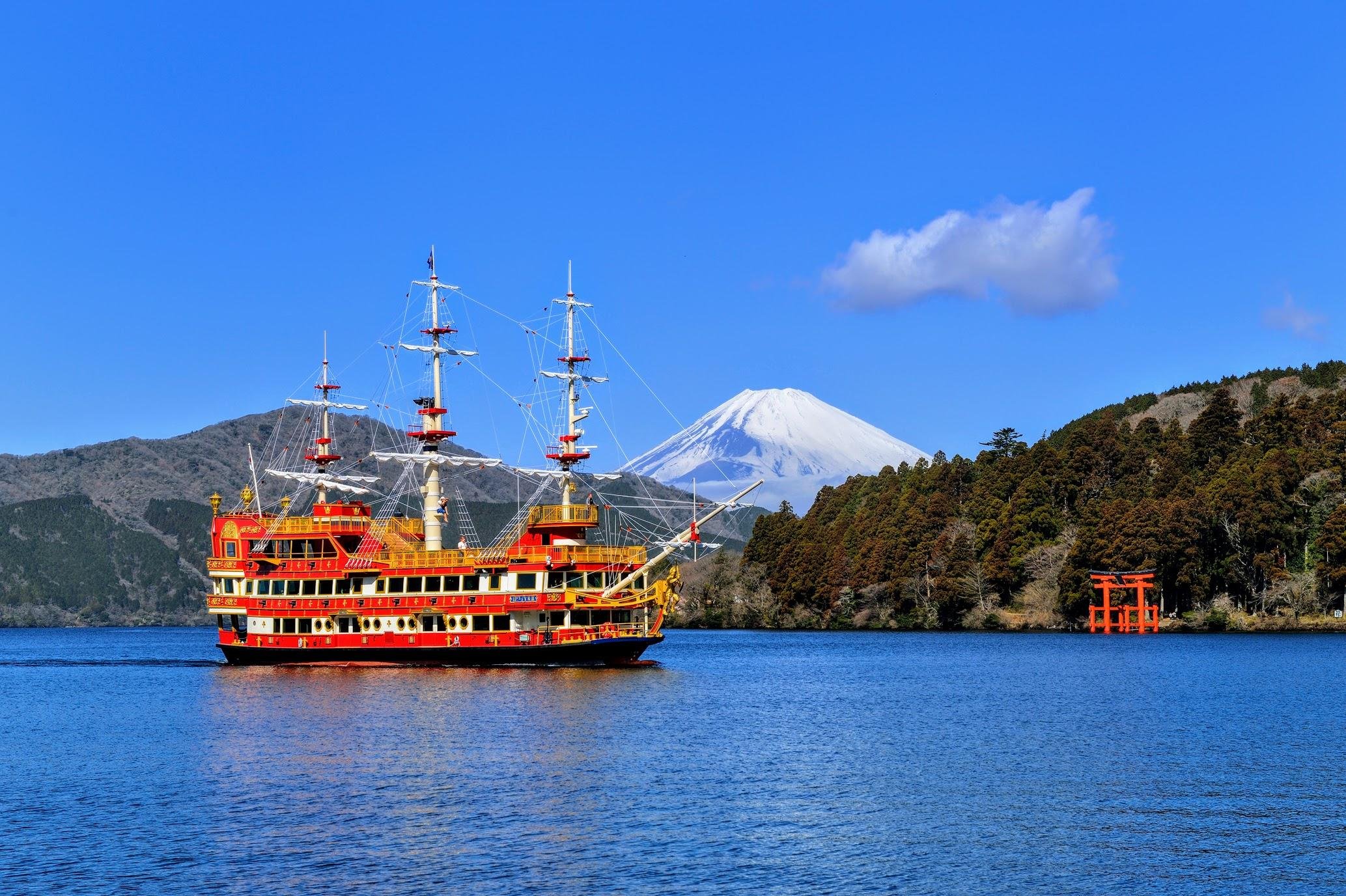
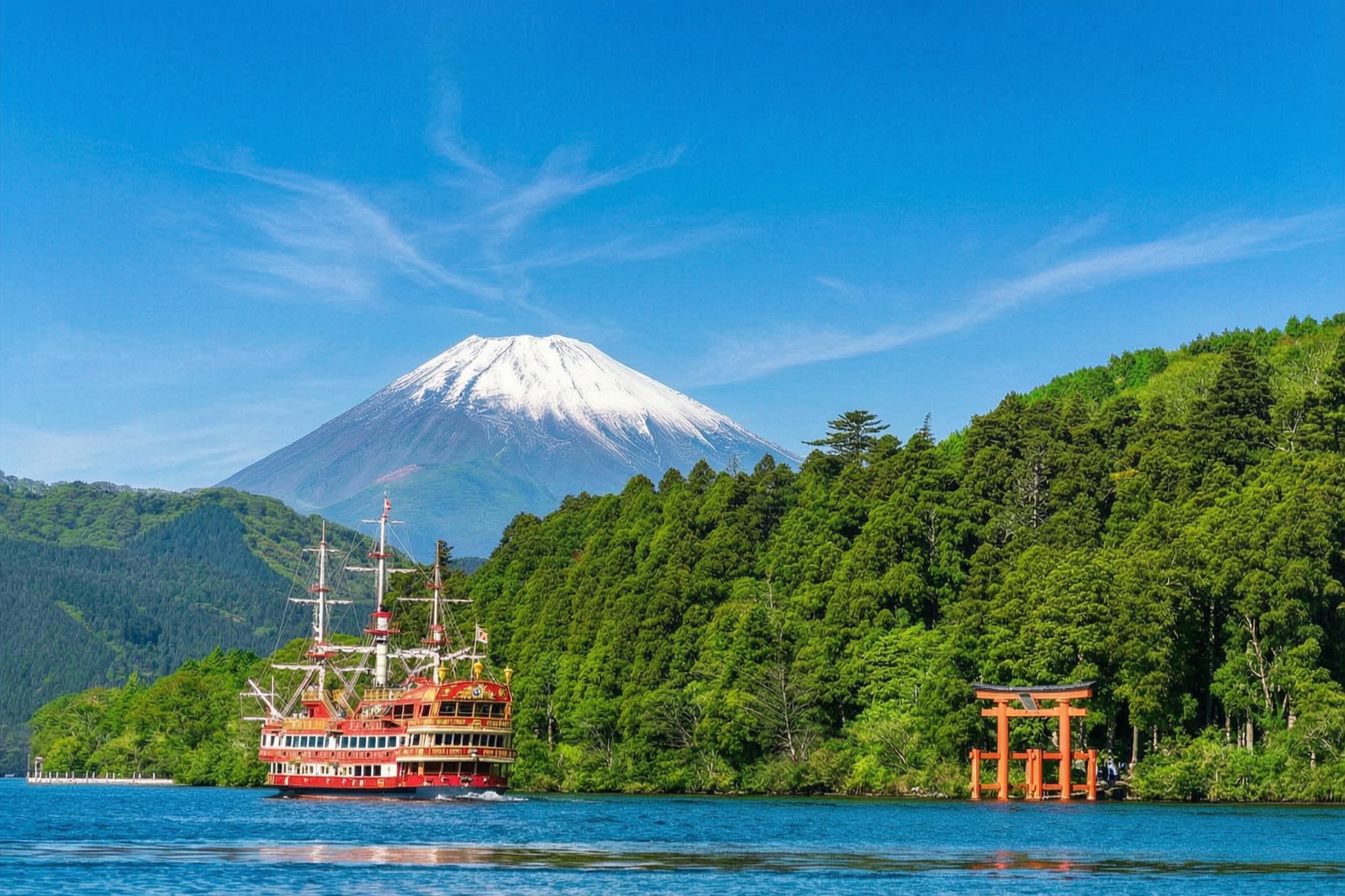
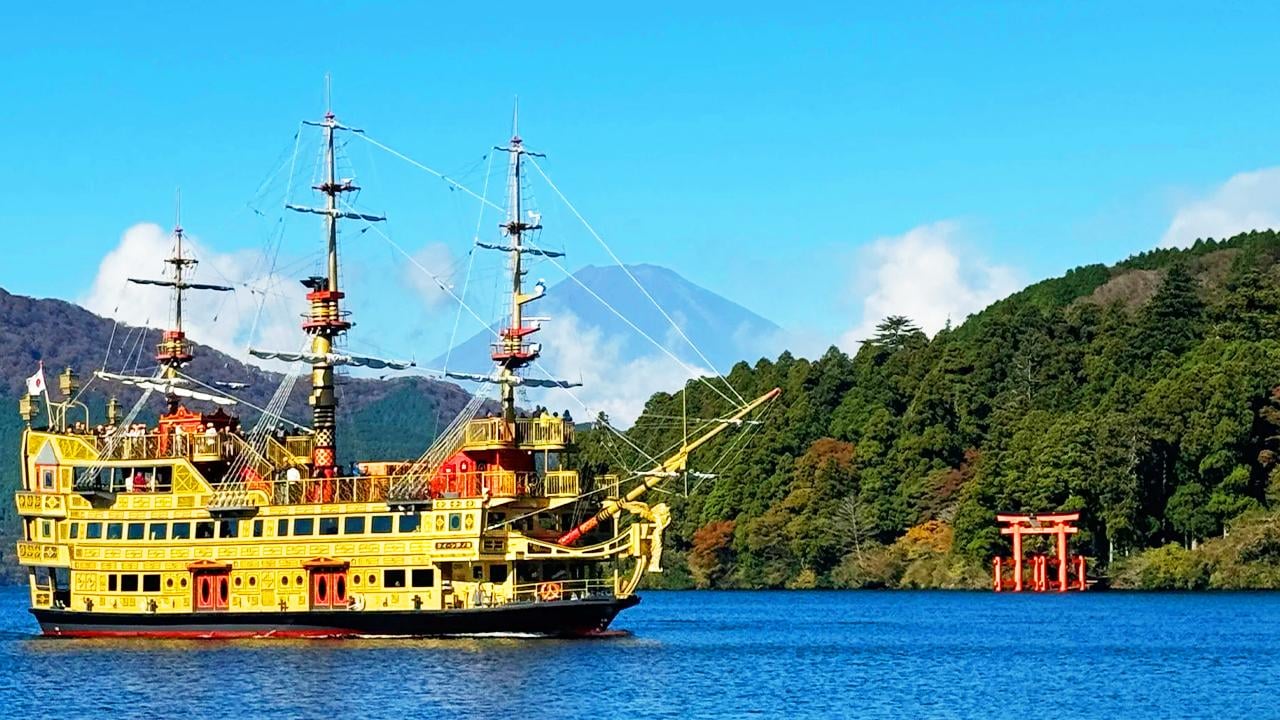
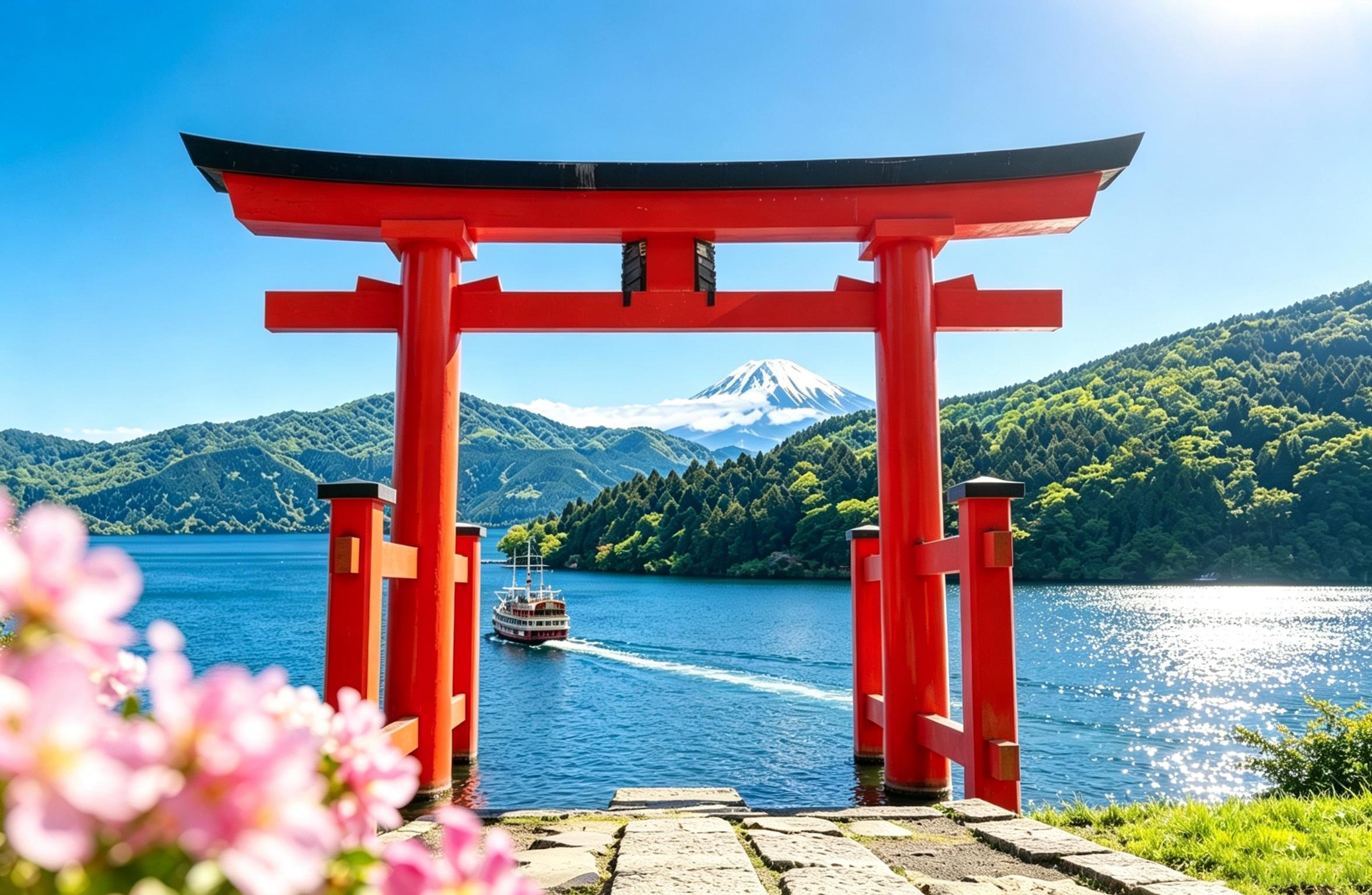
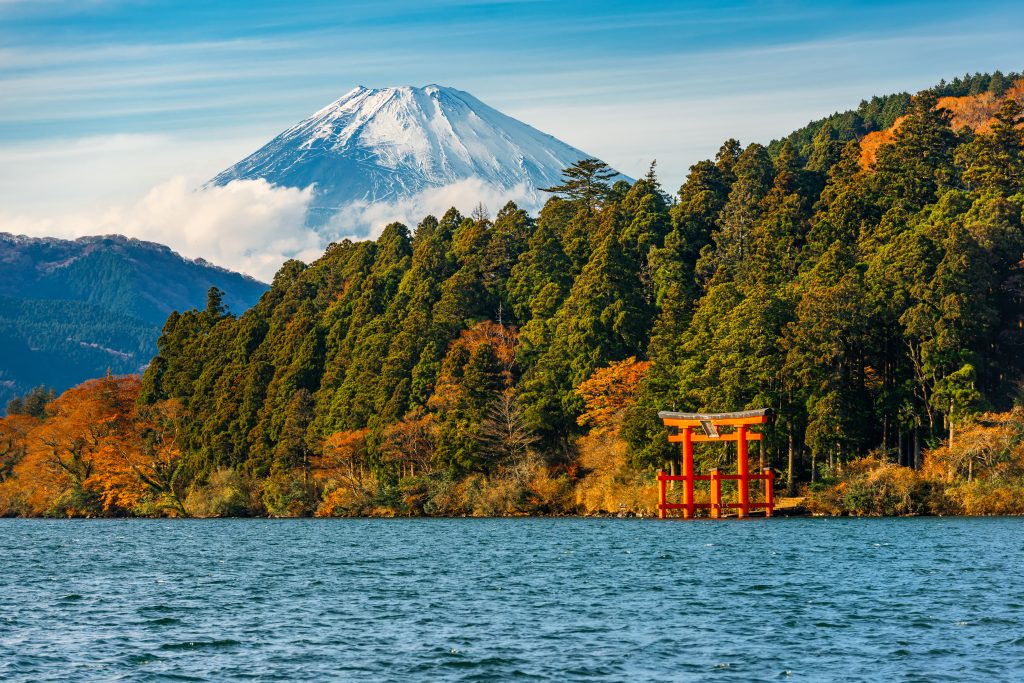
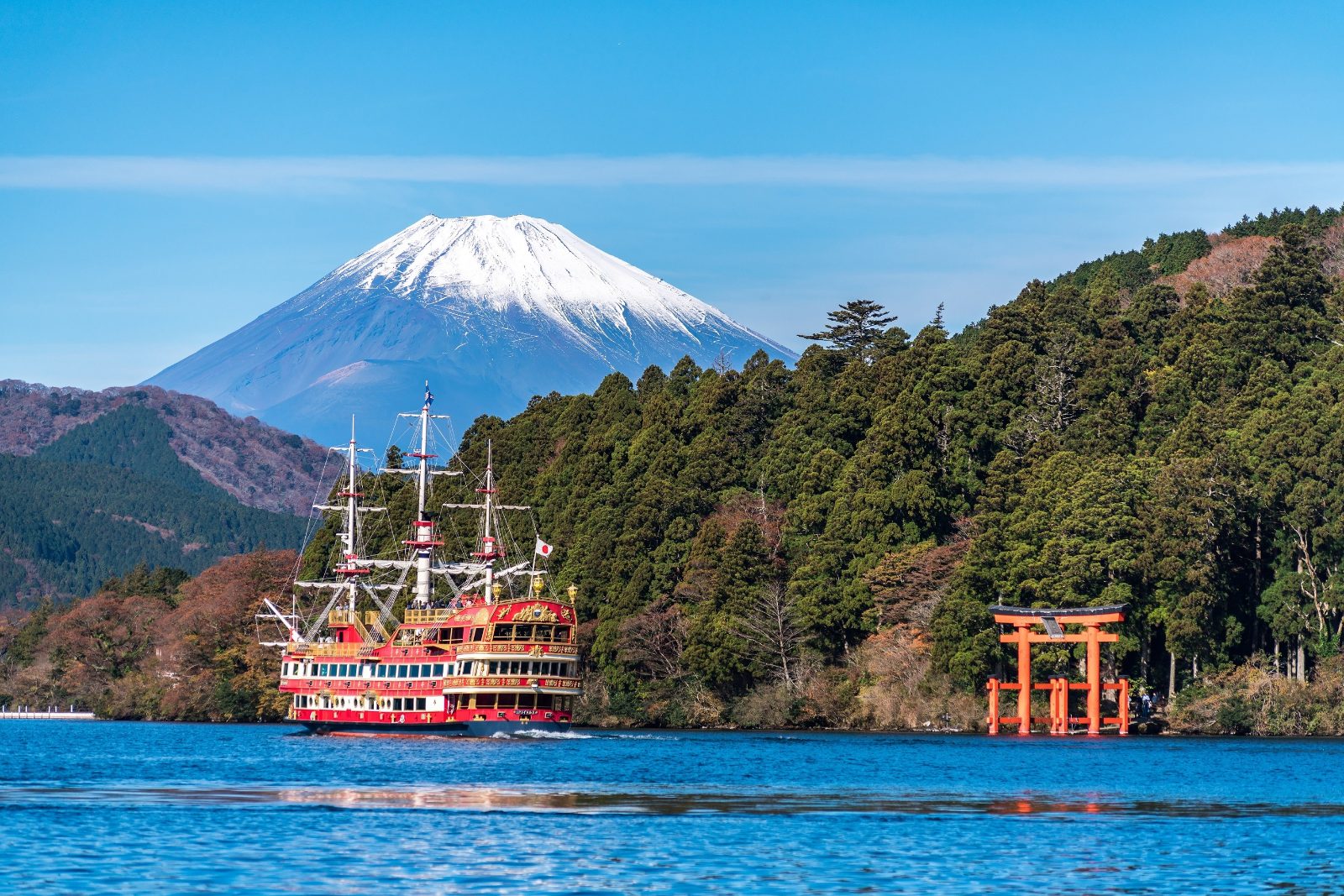
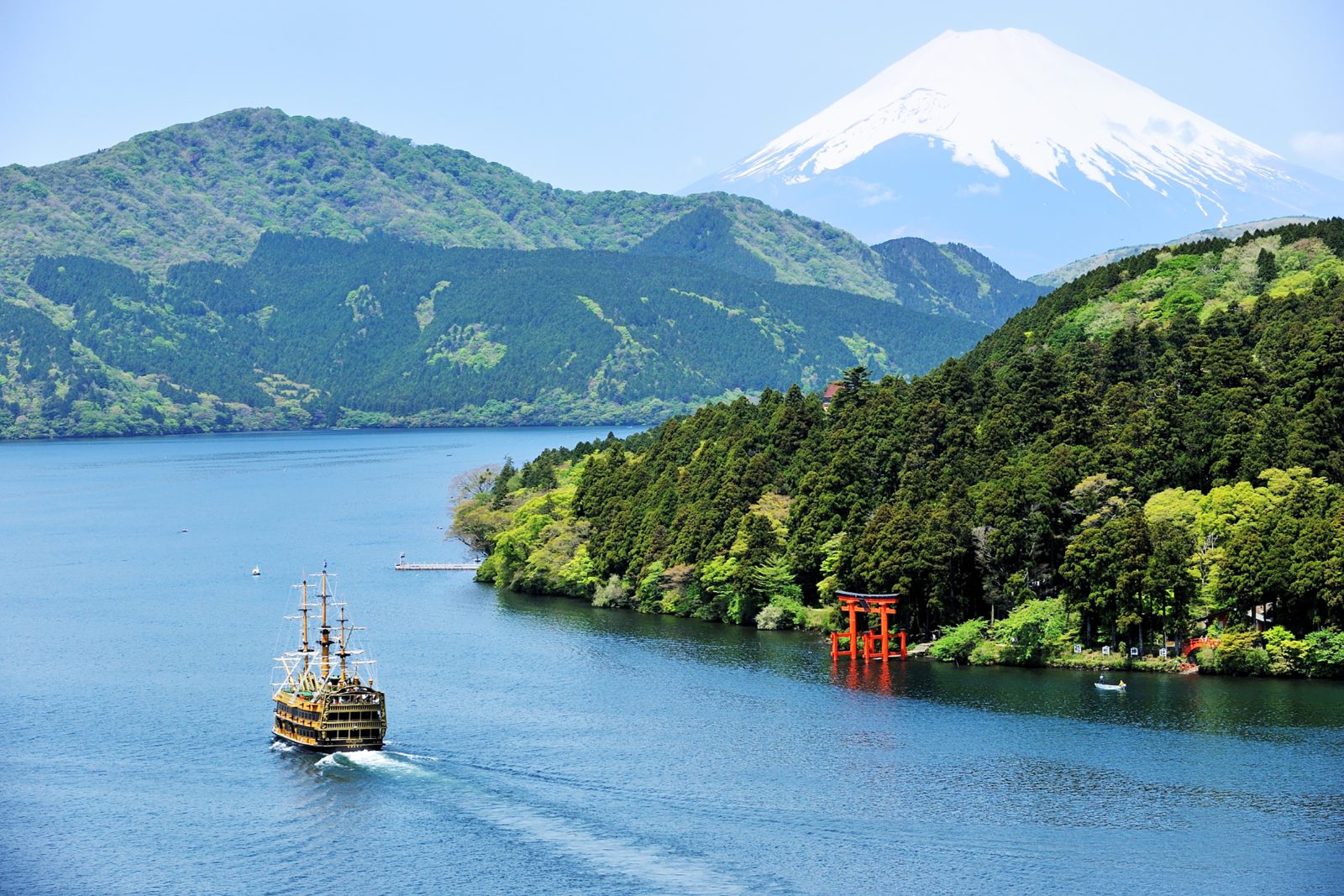
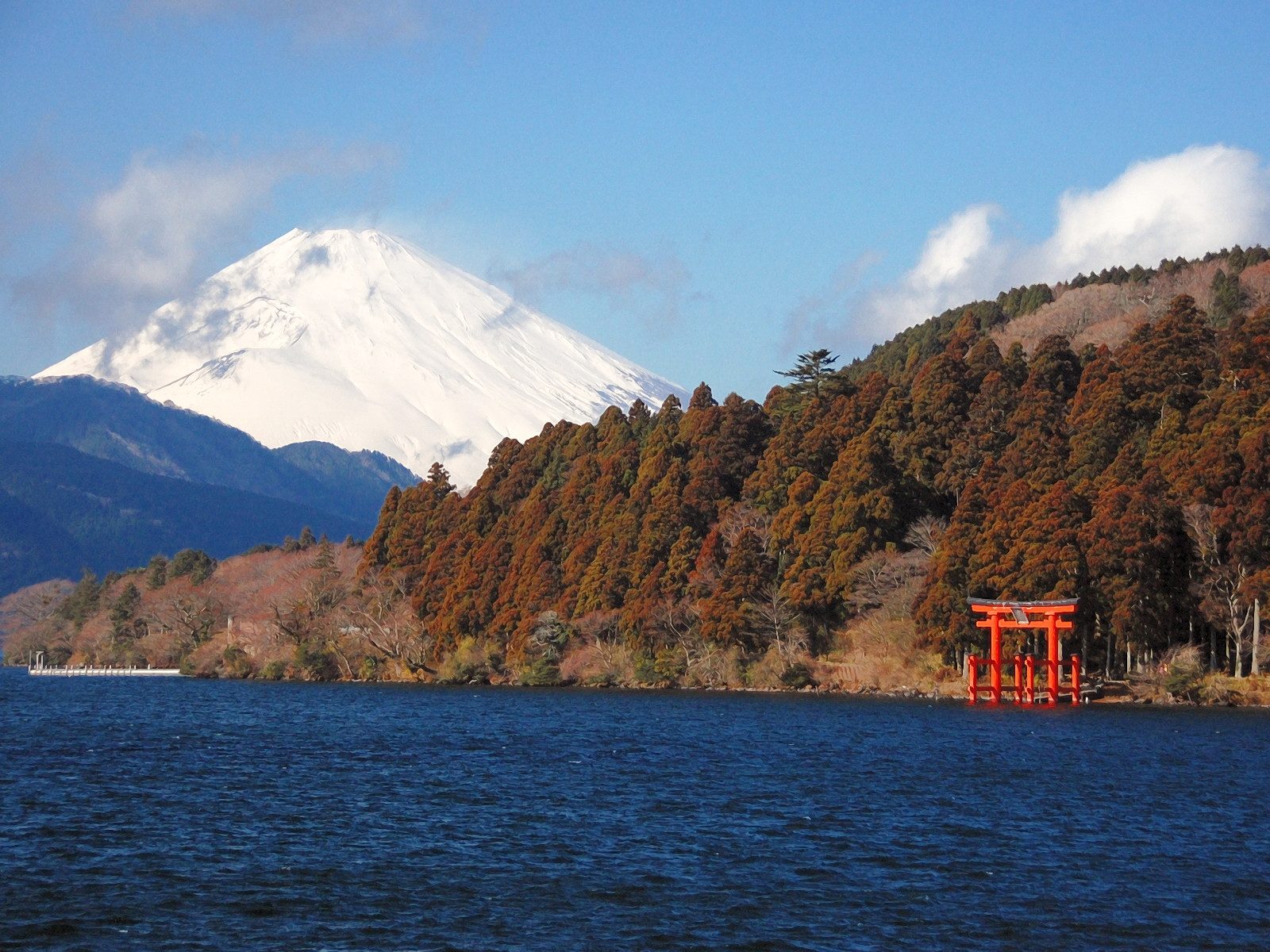
This historic landmark features a floating torii gate on the water, providing a classic scene for those on a day trip from tokyo to hakone mt fuji.
This geothermal area allows visitors to see sulfur steam vents and eat volcanic black eggs, essential for a day trip from tokyo to hakone mt fuji.
This site showcases outdoor sculptures amidst natural scenery, perfect for a day trip from tokyo to hakone mt fuji.
You board the Romance Car at Shinjuku before 8:30 a.m., securing a window seat on the right side for westward views. The express glides past suburban sprawl, then climbs into the foothills; within 85 minutes you step onto the platform at Hakone-Yumoto, where the mountain railway waits on an adjacent track.
The train zigzags upward through three switchbacks, pausing at Chōkoku-no-Mori for the sculpture museum before reaching Gōra's terminus. A ten-minute cable car ascent delivers you to Sōunzan, where the Hakone Ropeway departs every minute. The gondola rises over forested ridges, then descends into Owakudani's smoking valley; sulphur fumes seep through vents in the yellow-grey rock, and vendors hawk black eggs said to add seven years to your life. You buy one—it tastes ordinary but the theatre is half the appeal.
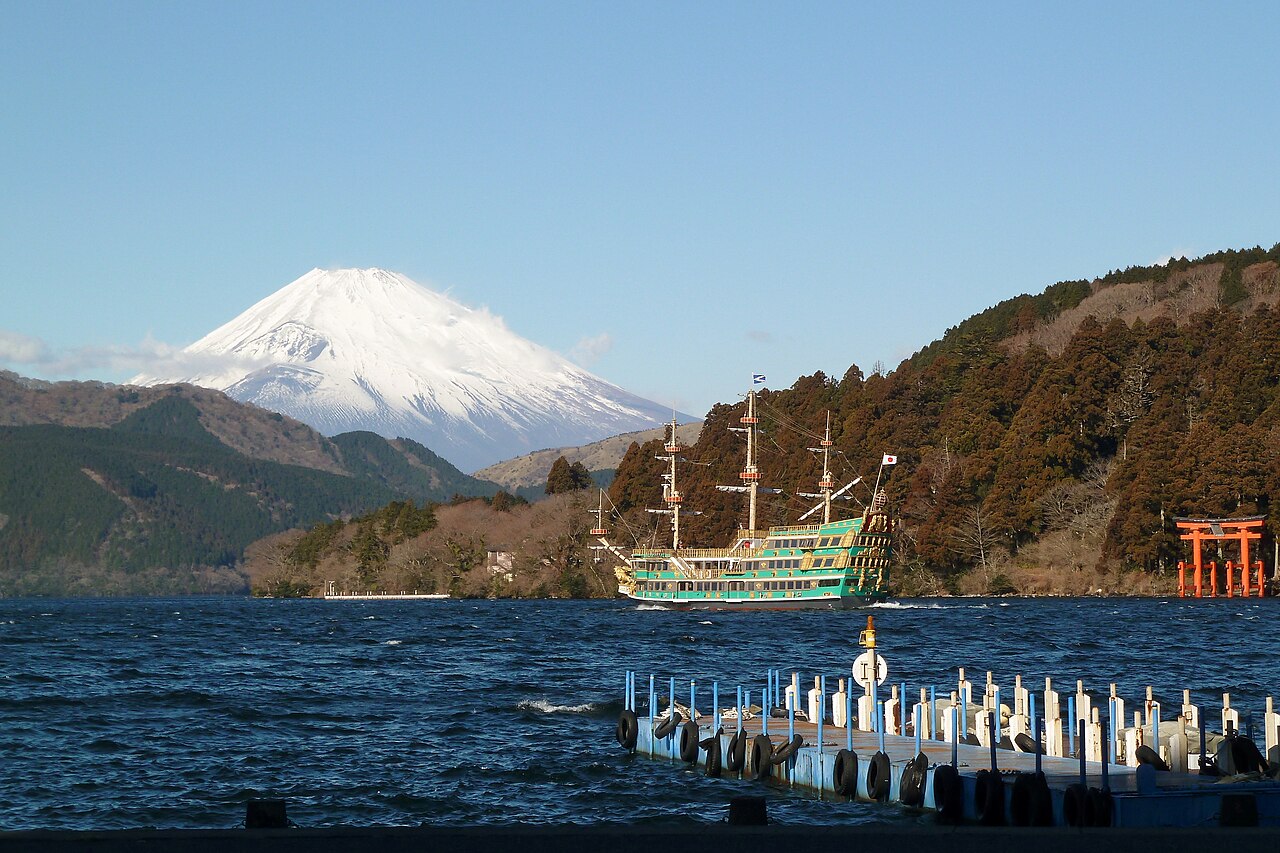
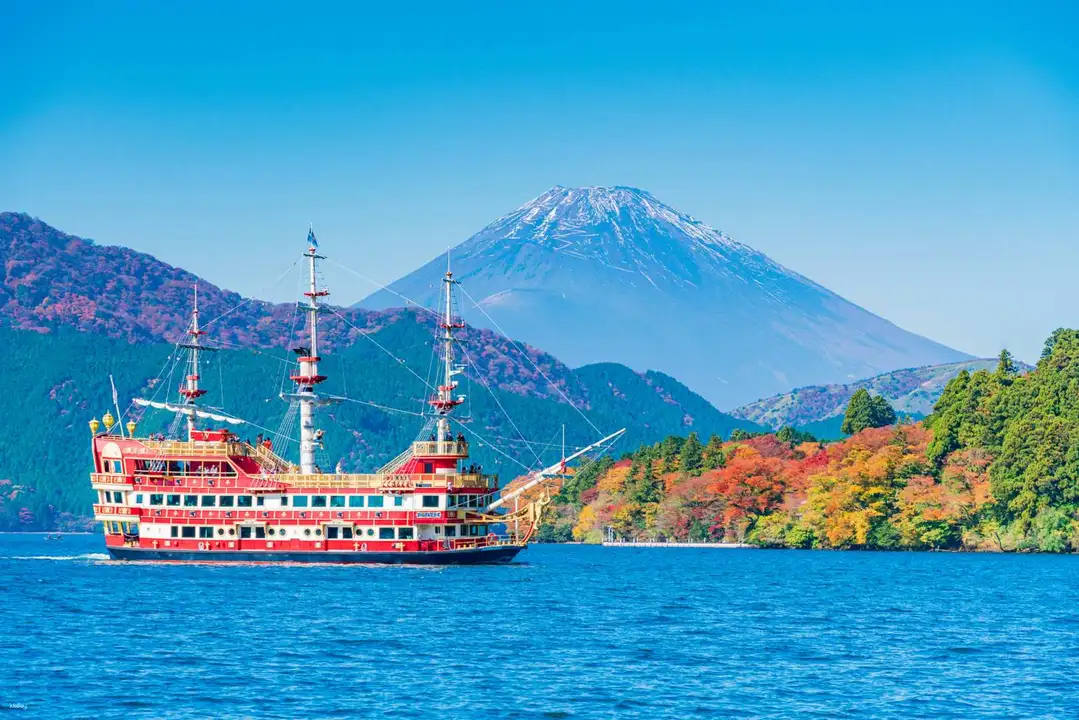
The ropeway continues to Tōgendai on Lake Ashi's northern shore. You queue for the pirate-ship ferry, claiming a spot on the upper deck as the vessel pushes into open water. Mount Fuji materializes above the southern hills, its symmetrical cone framed between the ship's rigging and the lake's glassy surface. Twenty-five minutes later you disembark at Moto-Hakone, walk the cedar-lined avenue to the shrine, and photograph the torii gate anchored in the shallows. By mid-afternoon you catch a bus back to Hakone-Yumoto, retracing the mountain route as autumn light slants through the valleys.
All the details about your upcoming adventure in one place
Hakone sits 100 kilometres southwest of Tokyo, straddling the rim of a 400,000-year-old caldera whose last major eruption carved Lake Ashi 3,000 years ago. The volcanic belt that forged this landscape also gave rise to Mount Fuji, whose 3,776-metre summit dominates the western horizon on clear mornings.
For centuries, Hakone served as the tenth station on the Tōkaidō road—the imperial highway connecting Edo and Kyoto—and its barrier checkpoint inspected every traveller crossing into the Kantō plain. Today, the region functions as Tokyo's nearest alpine escape, offering sulphur vents, ropeway gondolas, and unobstructed views of Japan's most recognizable peak within a 90-minute train journey.
The Hakone Tozan Railway, Japan's oldest mountain railway, climbs 445 metres over eight kilometres, switchbacking through forested gorges that bloom with hydrangea in June and blaze crimson by late October. At Owakudani—the valley's active volcanic zone—hydrogen sulphide steam vents heat the ground to 130 degrees Celsius, producing the black-shelled eggs boiled in mineral-rich springs and sold as kuro-tamago. Lake Ashi, formed when lava dammed the Hayakawa River, stretches 7 kilometres beneath the Hakone mountains; replica pirate ships and traditional sightseeing vessels cross its indigo waters, framing Mount Fuji beyond the lake's southern shore. The Hakone Shrine, founded in 757, anchors its vermillion torii gate in the lake's shallows, a composition photographed by millions yet still striking in person.
A day trip from Tokyo to Hakone Mt Fuji typically begins at Shinjuku Station aboard the Odakyu Romance Car, a reserved-seat express that reaches Hakone-Yumoto in 85 minutes. From there, the Hakone Freepass—valid on eight forms of transport—unlocks the circular route: mountain railway to Gōra, cable car to Sōunzan, ropeway over Owakudani's sulphur fields, descent to Tōgendai, and ferry across Lake Ashi to Moto-Hakone. Weather dictates Fuji's visibility; the mountain appears on roughly 130 days per year, most reliably between November and February when dry winter air clears the atmosphere. Summer months bring humidity and afternoon cloud cover that often obscure the summit by noon, making early arrival essential. The Hakone Open-Air Museum and Pola Museum of Art anchor the region's cultural offerings, but most visitors prioritize the volcanic and alpine landscapes that justify the journey.
The combined itinerary attracts 19 million visitors annually, yet the region's topography distributes crowds across multiple transport modes and elevations. Weekday mornings in autumn and late spring offer the clearest conditions and fewest queues. Hakone's geothermal activity continues to shape its economy and infrastructure; periodic volcanic alerts occasionally close the ropeway, though alternative bus routes maintain connectivity.

Hakone served as the tenth station on the Tōkaidō road, its barrier checkpoint inspecting every traveller crossing into the Kantō plain.
Dress in layers as temperatures fluctuate between the valley and the higher elevation of the mountain slopes during your day trip from tokyo to hakone mt fuji.
Coin lockers are available at major transit hubs to store larger items while you complete your day trip from tokyo to hakone mt fuji.
Photography is permitted in outdoor public areas, though tripods may be restricted in crowded transit zones during a day trip from tokyo to hakone mt fuji.
Strollers are difficult to navigate on mountain trails; baby carriers are recommended for families on a day trip from tokyo to hakone mt fuji.
Many transit facilities are equipped for mobility aids, but some historic Hakone sites have steep stone steps that limit full access during a day trip from tokyo to hakone mt fuji.
Local restaurants offer regional specialties, but bringing portable snacks is advised for your day trip from tokyo to hakone mt fuji to maximize time at viewing spots.
Opening Hours
09:00–17:45
Address
Hakone, Ashigarashimo District, Kanagawa, Japan
Entry Fee
0 JPY (Free entry to the region; individual attractions charge separate fees.)
Best Arrival
09:00–10:30 — Arrive early to beat crowds and improve chances of clear Mt. Fuji views before midday mist.
Phone
+81-460-85-5700
Official Site
https://hakone-japan.com/
Public transport · 85 minutes · Fixed fare
Take the Odakyu Romancecar from Shinjuku to Hakone-Yumoto.
Bus · 20-40 minutes · Variable
Use the local mountain bus network to connect between sightseeing spots.
Since this involves a day trip from tokyo to hakone mt fuji, please refer to your specific booking provider for operator-specific terms. Regional entry remains 0 JPY, but independent transport tickets often require cancellation at least 24 hours prior to travel date.
Recommended time
Full day
A day trip from tokyo to hakone mt fuji requires careful coordination of the ropeway, lake cruise, and mountain railway. We suggest allocating a full day to complete this circuit, as midday transit lines often experience peak congestion. Opting for professional day trip from tokyo to hakone mt fuji tours can help manage these logistics, or you may secure day trip from tokyo to hakone mt fuji tickets in advance to reduce wait times at transit hubs.
Crowd levels through the day
Weather · crowds · average price — dots go green to amber to red as each metric rises.
Mild weather and cherry blossoms create ideal conditions for a day trip from tokyo to hakone mt fuji.
Warm temperatures provide clear views, though midday mist is common.
September to November offers comfortable hiking temperatures and colorful foliage for those on a day trip from tokyo to hakone mt fuji.
Cold, crisp air provides the highest probability of unobstructed visibility for your day trip from tokyo to hakone mt fuji.
Purchase a Hakone Free Pass to simplify all transfers on your day trip from tokyo to hakone mt fuji.
Aim to arrive during the 09:00–10:30 window to ensure clear views before cloud cover develops.
Hakone, Kanagawa, Japan
Main gateway for the regional transport network.
Get directionsThe strategic importance of Hakone emerged in 1619 when the Tokugawa shogunate established the Hakone Checkpoint along the Tōkaidō road, the vital artery connecting Edo (modern Tokyo) to Kyoto. The checkpoint enforced the sankin-kōtai system, which required feudal lords to maintain residences in Edo and travel periodically between their domains and the capital. Officials scrutinized travelers for weapons entering Edo and women leaving, a control mechanism designed to prevent rebellion by keeping lords' families as de facto hostages. The checkpoint's location exploited Hakone's natural defenses: Lake Ashi to the west, steep mountain passes, and limited routes made surveillance efficient. For over 250 years, no traveler could bypass this fortified gateway without risking execution. The 1868 Meiji Restoration abolished the feudal system and dismantled the checkpoint in 1869, transforming Hakone from a military chokepoint into a leisure destination. The opening of the Tōkaidō railway line in 1889 reduced travel time from Tokyo to hours rather than days, and wealthy merchants began building lakeside villas. The 1919 establishment of Fuji-Hakone-Izu National Park formalized conservation efforts and promoted tourism infrastructure. A reconstructed Hakone Checkpoint opened in 2007 based on Edo-period records, allowing visitors to examine the guard stations, gates, and inspection protocols that once controlled passage. Today, a day trip from Tokyo to Hakone Mt Fuji follows the same geographic corridor the checkpoint once guarded, though modern travelers face no interrogation. The region's volcanic activity shaped both its defensive value and its modern appeal. Hot springs, or onsen, documented since the 8th century, attracted pilgrims and nobles long before the checkpoint era. Mount Fuji, visible from multiple Hakone vantage points on clear days, held religious significance as a sacred peak. The Hakone Shrine, founded in 757, predates the checkpoint by eight centuries and remains a pilgrimage site. Volcanic eruptions periodically reshaped the landscape; the last major event in 1170 created the current Lake Ashi basin. Hakone day trip from Tokyo Mt Fuji tours now integrate these layered histories: travelers purchase Hakone day trip from Tokyo to Hakone Mt Fuji tickets to access the pirate ships crossing Lake Ashi, the ropeway over Owakudani's active sulfur vents, and the reconstructed checkpoint that once determined who could proceed toward the capital.
Hakone Shrine founded on the shores of Lake Ashi, establishing the region as a spiritual site
Tokugawa shogunate constructs Hakone Checkpoint to control Tōkaidō road traffic between Edo and Kyoto
Meiji government dismantles the checkpoint following the abolition of the feudal system
Tōkaidō railway line opens, reducing Tokyo-Hakone travel time and enabling leisure tourism
Fuji-Hakone-Izu National Park designated, formalizing conservation and tourism infrastructure
Reconstructed Hakone Checkpoint opens to the public based on historical Edo-period documentation
Stand on the pebble shore of Lake Ashi to capture the vermilion torii gate framed against the volcanic peak. This iconic composition is a highlight of any day trip from tokyo to hakone mt fuji.
Position yourself at the edge of the pier for a wide-angle perspective of the sightseeing pirate ships passing by with the mountain in the background. It is a central point for those seeking efficient day trip from tokyo to hakone mt fuji tours.
Look out from the observation deck toward the northwest to capture the steaming sulfuric vents alongside the distant mountain summit. Many visitors use this vantage point during a day trip from tokyo to hakone mt fuji tour.
Located within the park grounds, this spot offers a framed view of the lake surface reflecting the silhouette of the volcano. Consider this for your day trip from tokyo to hakone mt fuji tickets planning.
Planning a day trip from tokyo to hakone mt fuji with children requires careful pacing to manage travel times and navigation between transit modes. This region offers a variety of public transportation experiences that keep younger travelers engaged while exploring the mountainous terrain.
Most Hakone transport, including buses and cable cars, is stroller-friendly, though folding them is necessary during peak transit times. Using a carrier is often more practical for navigating crowded platforms or stairs at transfer points.;Facilities
Finding quality meals during a day trip from tokyo to hakone mt fuji is straightforward, as the transit loop offers numerous traditional eateries. While exploring regional landmarks, travelers can enjoy local specialties ranging from mountain soba to unique volcanic snacks.
Famous for kuro-tamago, these black eggs are boiled in geothermal waters and are a staple for those on a day trip from tokyo to hakone mt fuji tours. Located right at the volcanic vent, this spot is ideal for a quick, culturally significant snack during your Hakone sightseeing loop.
This historic venue offers high-quality buckwheat noodles near the Hakone Open-Air Museum. It provides a quiet setting to enjoy authentic flavors before continuing your day trip from tokyo to hakone mt fuji tour.
Located near Hakone-Yumoto station, this restaurant serves accessible Japanese dishes perfect for visitors using day trip from tokyo to hakone mt fuji tickets. It is a reliable choice for lunch or an early dinner when returning from the caldera or lake regions.
Everything you need to know for your journey
The Hakone region is accessible daily from 09:00–17:45.
Entrance to the region is 0 JPY, though individual attractions charge separate fees.
We recommend the 09:00–10:30 arrival window to beat crowds and secure clear views.
Yes, coin lockers are located at major stations throughout the Hakone area.
Yes, photography is permitted in public areas, though tripods may be restricted on transport.
Yes, you may bring snacks, though many local eateries are available.
Many areas have accessible transport, though historic sites often feature stairs.
Cancellation policies depend on the specific tour operator; please check your individual booking receipt.
Wear comfortable walking shoes and bring layers for changing mountain weather.
Ancient shrine complex situated on the shores of Lake Ashi.
Central area with many traditional ryokan inns.
Join thousands of happy travelers who have discovered this incredible experience
Book Your Experience Now